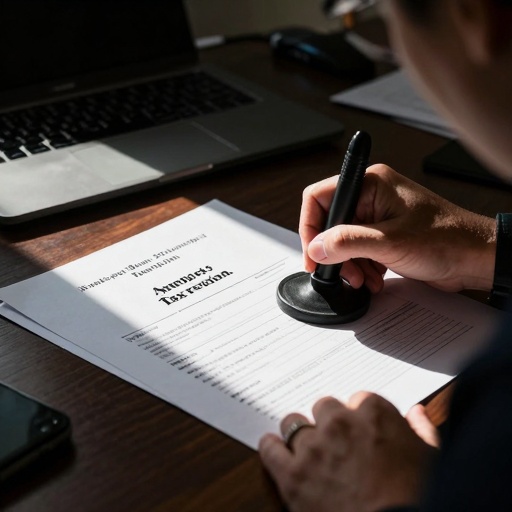
TALLAHASSEE — A Leon Circuit Court judge heard arguments on Wednesday regarding whether the proposed constitutional amendment for a property tax cut, set to appear on the November ballot, is misleading to voters. The case centers on HJR 1F, which aims to increase the homestead exemption from $50,000 to $150,000 next year and $250,000 in subsequent years. However, this relief would not apply to property tax levies for K-12 public schools.
Arguments Over Political Rhetoric
Three groups of plaintiffs, including former local government officials and a former Republican legislator, argue that the title and ballot summary approved by the GOP-led Legislature in June employ "emotional and political rhetoric" designed to sway voters. Attorney Jamie Cole contended that the title, "Save Our Homes from Excessive Property Taxes," violates previous court rulings by using biased language.
“The ballot question... has to be fair and it has to be accurate,” said Cole. “It should not hide the ball and it should not mislead.”
Cole pointed to a 1994 Florida Supreme Court opinion regarding a "Save Our Everglades" amendment, which was deemed misleading because it implied the Everglades were lost or in danger of being lost. Cole argued that similar emotional language is present in the current tax proposal.
State’s Defense and Political Context
In response, Benjamin Gibson, an attorney representing the state, argued that the burden was on the plaintiffs to prove the ballot summary was defective. He maintained that the title accurately spells out the danger of excessive taxes without being misleading. Gibson also downplayed concerns that the measure grants the Legislature veto power over local spending, noting it restricts such spending to infrastructure, education, and public safety.
The amendment is largely the result of a year-long campaign by Governor Ron DeSantis, who highlighted surging property tax revenues over the last six years. While DeSantis plans to vote for the measure, he stated he will not actively campaign for it after criticizing the Legislature for modifying his original proposal to exempt school taxes, as noted by Infobae.
Implications for November Election
The outcome of this legal challenge carries significant weight as general election mail ballots are scheduled to begin printing at the end of August. If Judge David Frank finds part of the ballot measure defective, Attorney General James Uthmeier has 10 days to correct the issues, more context in Florida Property Tax Amendment Faces Legal Challenge Over Ballot Language.
Former Sen. Jeff Brandes, a Republican from St. Petersburg who brought one of the lawsuits, stated that the amendment appears partial and advocacy-driven rather than neutral. Meanwhile, DeSantis has warned opponents that seeking corrections could backfire politically. Local government officials are also campaigning against the proposal due to fears of massive budget cuts if it receives the 60 percent voter support required for passage.