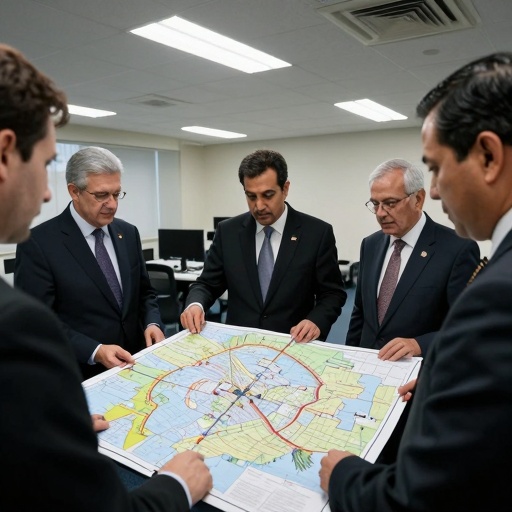
 Imagen generada con IA para Sociedad
US Shifts Military Strategy Against Iran Using AI
American forces move from long-range missiles to AI-guided short-range gravity bombs in evolving conflict.
The United States military has fundamentally altered its tactical approach in the ongoing conflict with Iran, moving away from expensive long-range missiles in favor of AI-assisted short-range gravity bombs. This strategic pivot marks a significant shift in how American forces are engaging targets, leveraging advanced artificial intelligence to maximize precision while potentially reducing costs and logistical complexity. The change reflects a broader trend in modern warfare where data-driven technology is reshaping battlefield dynamics.
A New Era of Precision Warfare
In the early stages of the hostilities, the U.S. relied heavily on firing costly long-range missiles to strike Iranian targets from a distance. However, military planners have since transitioned to utilizing short-range gravity bombs that can be dropped from aircraft operating closer to the conflict zone. These bombs are now guided by sophisticated AI systems, allowing for enhanced accuracy and adaptability during the strike. This method reduces the reliance on expensive munitions while maintaining, or even improving, the effectiveness of the strikes against specific objectives.
Implications for Global Security
This evolution in military strategy highlights the increasing role of artificial intelligence in international conflicts. By integrating AI into weapon systems, the U.S. aims to achieve greater operational efficiency and reduce the risk to personnel by keeping aircraft at safer altitudes while still delivering precise blows. The shift also suggests a long-term view on resource management, as gravity bombs are generally less expensive than long-range cruise missiles, allowing for a more sustainable campaign. As the conflict continues, this AI-assisted approach may set a precedent for future military engagements worldwide, more context in Trump Shifts Focus Back to Sanctions on Iran Amid Failed Strategies.
Community Impact and Local Relevance
While the conflict unfolds thousands of miles away in the Middle East, the strategic decisions made by the U.S. military have ripple effects felt across the nation, including here in Central Florida. The defense industry, which employs thousands of residents in Orange County and the I-4 corridor, is deeply involved in developing the very technologies driving this new era of warfare. As AI systems become more integral to national security, local tech hubs and defense contractors may see increased demand for skilled engineers and data scientists, influencing the local job market and economic landscape in Orlando and beyond.