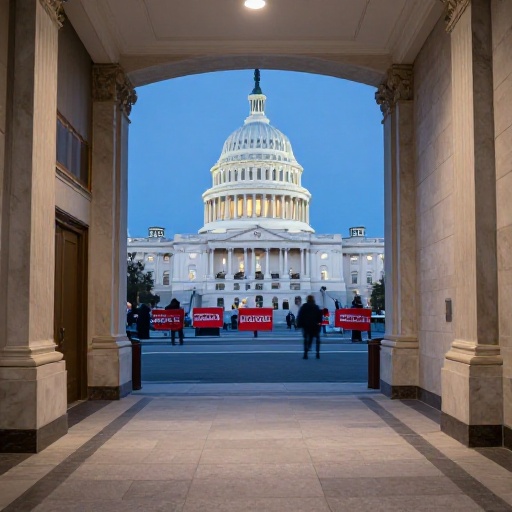
Washington, D.C. — The atmosphere in the nation’s capital has been a study in contrasts this week. While the White House prepared for a high-profile diplomatic event featuring Chinese President Xi Jinping, lawmakers on Capitol Hill were busy articulating a much sterner message regarding Beijing's global influence and domestic policies.
President Donald Trump is extending a warm welcome to his counterpart, emphasizing the importance of maintaining dialogue between the world’s two largest economies. However, this diplomatic hospitality stands in stark opposition to the growing chorus of criticism emerging from Congress on both sides of the aisle.
Diplomatic Warmth Meets Political Coldness
The White House has framed President Xi's visit as an opportunity to stabilize relations and address shared global challenges. Officials have highlighted potential areas for cooperation, ranging from economic stability to international security issues that require joint attention.
Yet, inside the halls of Congress, the tone is markedly different. Lawmakers are using this high-visibility moment to denounce specific actions taken by China, arguing that diplomatic engagement should not come at the expense of American interests or values.
Critics on Capitol Hill point to ongoing concerns regarding trade practices, intellectual property theft, and human rights issues. They argue that while a friendly handshake is useful for protocol, it does little to address the structural challenges posed by Beijing's rise as a global superpower.
Bipartisan Concerns Take Center Stage
What makes this moment particularly significant is the bipartisan nature of the criticism. Historically, China policy has been one area where Democrats and Republicans have found common ground. This visit appears to be reinforcing that unity in opposition rather than division.
Republican lawmakers are focusing heavily on economic competition and national security threats posed by Chinese technology firms. Meanwhile, Democratic representatives are often more vocal about human rights concerns and the treatment of minority groups within China's borders.
This dual-pronged approach creates a complex political landscape for the Trump administration. While the executive branch seeks to project an image of strong leadership through personal diplomacy, it must navigate a legislative body that is increasingly skeptical of any perceived softness toward Beijing, as we reported in Xi Jinping Pitches China as Stable Alternative to U.S. Amidst Rare Diplomatic Fl.
The Weight of Public Opinion
Public opinion in the United States has also shifted significantly over the past decade. Where China was once viewed primarily as an emerging market opportunity, it is now widely seen as a strategic competitor. This shift in perception influences how lawmakers approach their constituents and how they vote on legislation related to trade and defense.
Constituents across Orlando and Central Florida are not immune to these national trends. As the region's economy becomes more integrated with global supply chains, local businesses and workers feel the impact of international tensions directly. The political rhetoric coming out of Washington resonates deeply in districts that rely heavily on tourism and manufacturing.
Implications for Future Policy
The disconnect between the White House's diplomatic efforts and Congress's legislative posture suggests a difficult path forward for U.S.-China relations. Lawmakers are likely to introduce or support bills that impose stricter regulations on Chinese investment and enhance monitoring of cross-border data flows.
President Trump faces the challenge of balancing his desire for personal rapport with President Xi against the political necessity of addressing Congressional concerns. Failure to do so could result in legislative pushback that undermines executive agreements reached during such high-level visits.
As the visit progresses, observers will be watching closely to see if any joint statements or memorandums of understanding emerge from these meetings. However, given the current political climate, substantive policy changes may remain elusive despite the warm reception afforded to Chinese officials.