Trump Claims Oil Is At 'Pre-War Levels' As Central Florida Drivers Face High Gas Prices
The former president's comments contrast with current fuel costs in Orlando, where drivers still pay premium prices despite stabilized Middle Eastern supply chains.
Former President Donald Trump recently declared that oil markets have returned to "pre-war levels," a statement intended to highlight economic stability and energy affordability. However, for Central Florida residents navigating the daily commute along I-4 or heading toward Disney World theme parks, this assertion feels disconnected from reality at the pump.
While global supply chains in the Middle East have indeed shown signs of recovery in recent weeks, local gas prices remain stubbornly elevated. This discrepancy between national political rhetoric and regional economic experience is becoming a focal point for voters ahead of the upcoming midterm elections.
The Gap Between Global Supply And Local Cost
Trump’s assertion relies on broad geopolitical metrics regarding crude oil production in conflict zones like Ukraine or broader Middle Eastern tensions. The logic suggests that as long as physical barrels are flowing, prices should drop to historical norms seen before major escalations.
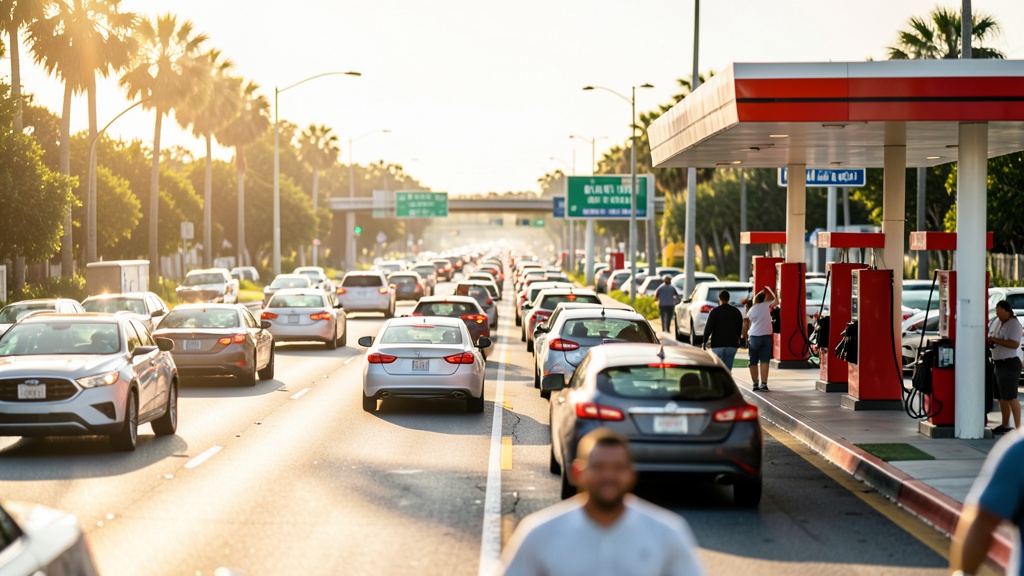
Data from the U.S. Energy Information Administration (EIA) indicates a stabilization in global Brent and WTI crude benchmarks. However, retail gasoline prices do not move in lockstep with wholesale oil costs. Refining margins, distribution logistics, and state taxes play significant roles in what drivers see on digital signs along Colonial Drive or State Road 417.
In Orange County, the average price for regular unleaded gas has fluctuated but remains higher than pre-pandemic averages. Drivers filling up at stations near Orlando International Airport or in Kissimmee are still paying premiums that strain household budgets despite the "pre-war" narrative promoted by political figures.
Impact On Central Florida Economy And Tourism
The theme park industry, a cornerstone of Orange County’s economy, is particularly sensitive to fuel costs. Universal Orlando Resort and Walt Disney World rely heavily on logistics for merchandise delivery and employee commuting. SeaWorld in nearby Seminole County also faces similar operational pressures.
When gas prices remain high, disposable income for local families decreases. This affects attendance at community events and dining options across Winter Park and Sanford. While tourism remains robust due to international travel demand, domestic road trips within Florida see reduced frequency when fuel costs exceed $3.50 per gallon in many areas.
Local business owners along the I-4 corridor report that while customers are still visiting, they are more price-conscious. The "pre-war" oil claim does little to alleviate the operational expenses faced by small businesses dependent on trucking and delivery services throughout Central Florida, more context in Trump Says Iran War Won't End Before US Midterms, Oil Prices May Stay High.
Voter Sentiment Ahead Of Midterms
As midterm elections approach, energy affordability remains a top concern for voters in Orange County. The disconnect between political statements about global oil markets and the actual cost of living is likely to influence voter behavior.
Polling data suggests that while many Americans recognize improvements in supply chain stability, they judge candidates based on their own grocery bills and gas receipts. For residents in Daytona Beach or Sanford, a national headline about "pre-war levels" does not translate into lower utility costs or cheaper groceries.
"The rhetoric from Washington often ignores the local reality of inflation," said one Orlando-based economic analyst. "Until wholesale prices directly correlate with retail drops at the pump, voters will remain skeptical."
This sentiment is echoed in suburban communities where commuting costs are a significant monthly expense. The I-4 corridor, connecting Jacksonville to Tampa through Orlando, sees heavy traffic daily. Fuel efficiency and price stability are practical concerns for workers rather than abstract geopolitical metrics.
Looking Ahead To Energy Policy
The debate over oil levels highlights the complexity of energy policy in a diverse state like Florida. While federal discussions focus on global conflicts, local leaders must address infrastructure resilience and regional pricing mechanisms.
Orange County commissioners and city councils across Central Florida are increasingly focused on how to mitigate transportation costs for residents. This includes investments in public transit options from UCF to downtown Orlando and supporting renewable energy initiatives that could eventually lower reliance on volatile global oil markets.
As the political season progresses, expect continued scrutiny of economic claims made by candidates. For Central Floridians, the proof will be in the price per gallon at their local station, not just in headlines about international supply chains.