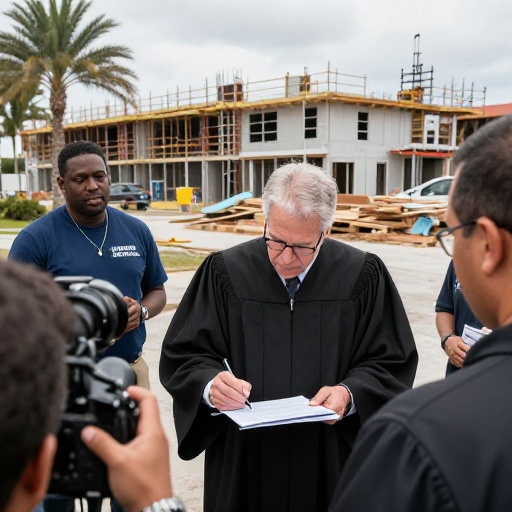
Orlando residents and national observers alike are processing a significant Supreme Court decision that clears the way for construction work to continue at Donald Trump’s private club in Palm Beach. In an unsigned order released Monday morning, the nation's highest court ruled against a historic preservation group seeking to halt the expansion of the Mar-a-Lago estate.
The ruling allows the former president and current candidate to proceed with his planned ballroom addition, despite strong dissenting opinions from within the Court itself. Chief Justice John Roberts explicitly stated that the project appears "likely unlawful" under existing federal statutes, yet he joined the majority in denying an immediate injunction against the construction.
Standing Dispute Overrides Legal Merits
The core of the Supreme Court’s decision rested not on the merits of historic preservation laws, but rather on whether the plaintiffs had the legal right to sue. The court determined that a coalition known as Preservation Action lacked "standing"—a procedural requirement meaning they could not demonstrate sufficient personal injury caused by the construction.
This technical dismissal effectively bypassed a lengthy review of whether the ballroom violated the National Historic Preservation Act or environmental regulations. By ruling on standing, the Court avoided issuing a definitive precedent on the legality of building large structures within protected historic districts near federal properties.
"The project is likely unlawful," Chief Justice Roberts wrote in his dissenting opinion, highlighting the tension between procedural hurdles and substantive law enforcement. "But we lack jurisdiction to stop it right now."
This distinction matters significantly for legal scholars tracking how the Court handles cases involving former presidents versus private citizens. The ruling suggests that even if a project violates federal codes, plaintiffs must first prove they are directly harmed in a way courts recognize before any construction can be paused.
Local Relevance and Orlando Context
While the Mar-a-Lago estate is located on Florida’s Atlantic coast, far from Orlando’s urban core, this decision carries weight for Central Floridians interested in property rights, tourism infrastructure, and political developments. The I-4 corridor remains a hub of real estate development, with new resorts and commercial spaces constantly reshaping the landscape around Disney World and Universal Studios.
Orlando’s city government closely monitors how federal rulings on historic preservation might influence local zoning laws in Winter Park and Lake Nona. If the Supreme Court lowers the bar for who can challenge construction projects based on standing, it could embolden developers across Orange County to push forward with large-scale expansions despite community opposition, more context in Federal Judge Allows Trump Administration Mail.
Furthermore, as Orlando positions itself as a key swing region during election cycles, any legal maneuvering involving Donald Trump draws intense local scrutiny. The city’s hospitality industry, which relies heavily on political stability and tourism flows, watches closely how such high-profile disputes might affect travel patterns or security protocols in the area.
Impact on Future Legal Challenges
The Supreme Court’s order does not declare the ballroom legal; it merely allows construction to proceed while other lawsuits continue elsewhere. Preservation groups are expected to pursue alternative legal avenues, potentially arguing that different statutes provide standing where previous ones did not.
For now, contractors remain on site at Mar-a-Lago. The ruling underscores a broader trend in federal courts: procedural barriers often outweigh substantive complaints regarding historic preservation and environmental impact. This dynamic may reduce the effectiveness of local advocacy groups trying to stop large developments through national litigation strategies.
As Orlando continues its own growth, balancing historic district protections with modern development needs remains a priority for city planners. The Mar-a-Lago case serves as a cautionary tale about the limits of federal courts in halting construction once procedural doors are closed.