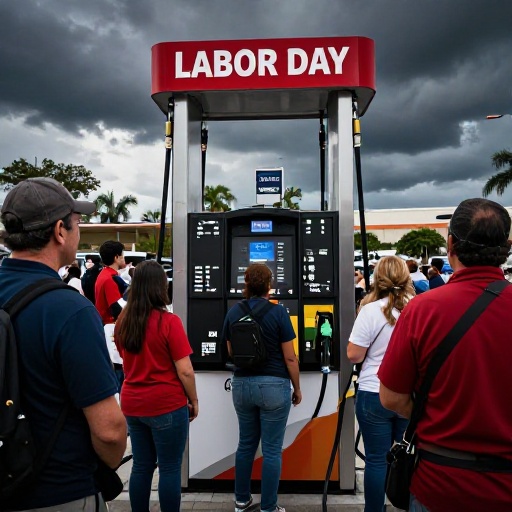
Orlando drivers are bracing for a significant financial hit this weekend as they head to gas stations. Labor Day marks one of the final major road trips of the summer season, but this year's pump prices tell a different story than previous years.
New data indicates that Americans will likely face the highest Labor Day gasoline prices on record. For Central Florida residents who rely heavily on their vehicles for commuting to theme parks and navigating the I-4 corridor, these numbers represent more than just statistics—they are immediate economic stressors affecting household budgets.
The Reality of Pump Prices in Orlando
While specific per-gallon figures fluctuate daily based on crude oil markets and regional supply chains, the trend is unmistakable. The average price for a gallon of regular unleaded fuel has climbed to levels not seen since before recent economic shifts.
In Orange County, where traffic congestion often forces drivers to seek alternative routes or fill up at premium locations near major attractions like Disney World and Universal Studios, these costs are compounded by convenience pricing. Local stations along International Drive and the 408 expressway frequently reflect national trends with a local markup.
Community members have taken to social media platforms to share their experiences at pumps in Kissimmee and Sanford. Many report that filling up a standard SUV or minivan, common vehicles for families visiting Central Florida’s attractions, now costs significantly more than it did just two years ago. This increase impacts not only leisure travelers but also the local workforce.
Transportation workers, including bus drivers and delivery personnel, are feeling the strain of rising operational costs. These expenses often trickle down to consumers in the form of higher prices for goods and services throughout Orlando’s vibrant retail sector.
The Political Backlash Against 'Drill Baby Drill'
These soaring fuel costs have landed squarely on the desk of former President Donald Trump, who recently campaigned heavily on energy independence. His slogan "drill baby drill" promised to unleash American oil production to lower prices at the pump.
CNN reports that Trump is now scrambling for answers as voters point out the disconnect between campaign promises and current economic reality. The irony of record-high gas prices during a holiday weekend serves as a stark reminder to critics who argue that energy policy changes take time, or perhaps fail entirely under certain regulatory frameworks.
Political analysts note that this issue resonates deeply with working-class voters in Florida’s swing districts. In areas like Daytona Beach and the broader I-4 corridor, where commuters travel long distances daily, fuel affordability is a top-tier concern for many residents, as we reported in Trump Defends $4 Gas Prices After Strike on Iran, Vowing No Apology to Florida V.
The pressure on Trump to provide concrete solutions or explanations has intensified as Labor Day approaches. Critics argue that simply increasing drilling permits does not immediately translate to lower prices at the store due to global market dynamics and refining capacity issues.
Impact on Central Florida Economy
For Orlando’s tourism industry, high gas prices pose a subtle but persistent challenge. While international tourists may be less sensitive to domestic fuel costs, local residents who drive for work or leisure are adjusting their spending habits.
Data from the American Automobile Association (AAA) suggests that national averages have been driven up by geopolitical tensions and supply chain bottlenecks. These factors affect every station in Central Florida, regardless of ownership type.
Local economists warn that sustained high energy costs can lead to reduced discretionary spending. When families spend more on fuel, they may spend less at local restaurants in Winter Park or shops in downtown Orlando. This ripple effect touches the broader Orange County economy.
The situation highlights a complex interplay between federal policy and local reality. While national leaders debate strategies for energy production, everyday Floridians must navigate their weekly budgets with these elevated costs in mind.
Looking Ahead
As the Labor Day weekend concludes, the question remains whether prices will stabilize or continue to climb into the fall season. For now, Orlando drivers are left to manage what is effectively a tax on mobility.
The political fallout from these price hikes may extend beyond just energy policy debates. It serves as a case study in how national economic trends impact hyper-local communities like those in Seminole County and Lake County.