Florida's 1972 Tire Reef Disaster Still Haunts Local Coastlines Decades Later
A failed environmental experiment sank two million tires off Fort Lauderdale in 1972, causing lasting damage to natural reefs and triggering an ongoing cleanup effort.
For decades, the waters off Florida’s southeastern coast have held a hidden secret. In 1972, local fishermen attempted to solve a waste management crisis by sinking two million used tires into the ocean near Fort Lauderdale. The goal was noble: create artificial reefs to boost fish populations and provide recreational diving spots for tourists.
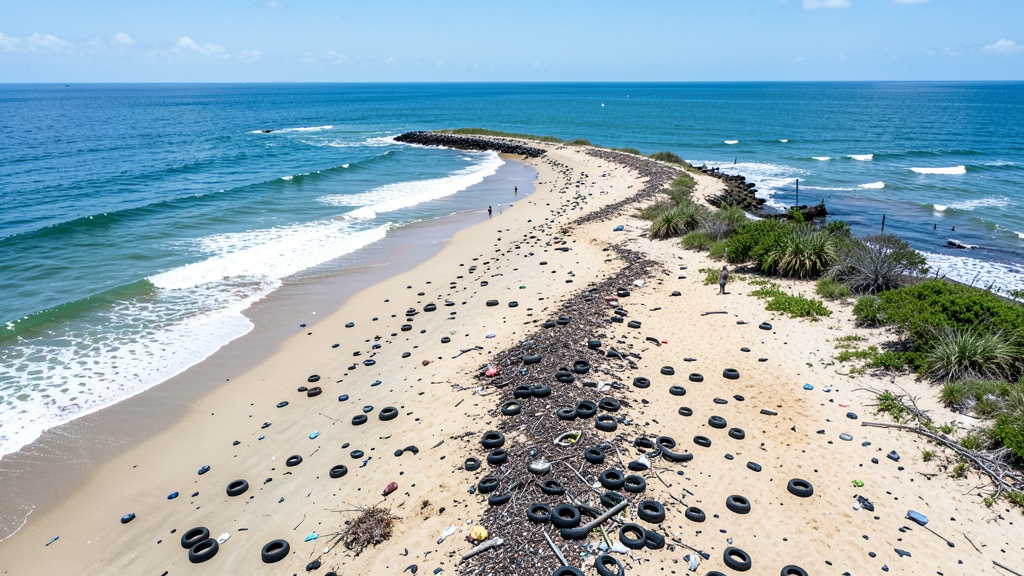
Instead of creating marine habitats, the project became an environmental disaster that continues to plague the region today. Rather than attracting life, the tire structures harmed natural coral ecosystems and released toxic pollutants into the water column. The legacy of this well-intentioned but poorly executed plan remains a cautionary tale for modern conservation efforts.
The Origins of a Flawed Experiment
To understand why two million tires were dumped in the ocean, one must look at the environmental context of early 1970s Florida. During this period, the state was experiencing an influx of tourists and residents, leading to a surge in waste generation. Used automobile tires became a significant portion of this refuse.
At the time, landfill space was becoming scarce, and disposal costs were rising for municipalities and private entities alike. Local fishermen and community leaders proposed a solution that seemed innovative at the time: repurpose the tires as artificial reef structures. The idea was to sink them in designated areas off Fort Lauderdale to create hard surfaces where marine organisms could attach themselves.
Proponents argued this would double or triple fish populations by providing shelter for juvenile species and creating new habitats for predators. It appeared to be a win-win situation: disposing of hazardous waste while simultaneously enhancing the local fishing industry and tourism economy.
The Ecological Backlash
Reality quickly diverged from theory. Instead of fostering healthy marine ecosystems, the tires began to degrade in ways that scientists had not anticipated. The rubber material did not break down harmlessly; instead, it leached heavy metals and chemical additives into the surrounding water.
More critically, the tire structures interfered with natural reef dynamics. Natural coral reefs require specific light conditions, water flow patterns, and substrate stability to thrive. The dense accumulation of tires disrupted these delicate balances, shading out existing coral colonies and preventing new growth.
The artificial reefs also became breeding grounds for invasive species rather than native fish populations. Furthermore, the physical structure of the tire piles proved unstable over time. As currents shifted, entire sections of the "reef" collapsed or drifted, causing further damage to nearby natural habitats that were previously undisturbed.
The Ongoing Cleanup Challenge
Decades after the initial sinking, the problem has not resolved itself. The tires remain on the ocean floor, slowly deteriorating and continuing to release pollutants into Florida’s coastal waters. This ongoing contamination poses a threat to both marine life and local fisheries, as this newspaper reported in Florida Drought Threatens Wildlife and Lawns Beyond Aesthetics.
Cleanup efforts have been intermittent and difficult due to the sheer volume of material involved. Removing two million submerged objects from the seabed requires specialized equipment and significant funding. The logistical challenges are compounded by the need to minimize disturbance to any remaining natural reef structures in the area.
Local environmental groups and government agencies continue to monitor the site, but a comprehensive removal plan remains elusive. The cost of extraction is high, and there is still no clear method for disposing of or recycling two million waterlogged tires on such a massive scale.
A Lesson for Modern Conservation
The 1972 tire reef project serves as a stark reminder that well-intentioned environmental interventions can have unintended consequences. It highlights the importance of rigorous scientific testing before implementing large-scale ecological modifications.
Today, artificial reef projects are approached with much greater caution and oversight. Modern initiatives involve detailed studies on material safety, long-term monitoring plans, and strict regulations to prevent similar disasters from occurring in Florida’s waters or elsewhere.
The legacy of the Fort Lauderdale tire dump is not just one of failure but also of learning. It underscores the complexity of marine ecosystems and the difficulty of manipulating them for human benefit without causing lasting harm. As Central Florida continues to grapple with environmental preservation, this historical episode remains a relevant reference point.
Residents and visitors along the I-4 corridor and southeastern coast are increasingly aware of these submerged hazards. While they may not see the tires from the surface, their impact on water quality and biodiversity is felt by local marine life and commercial fishing operations alike.