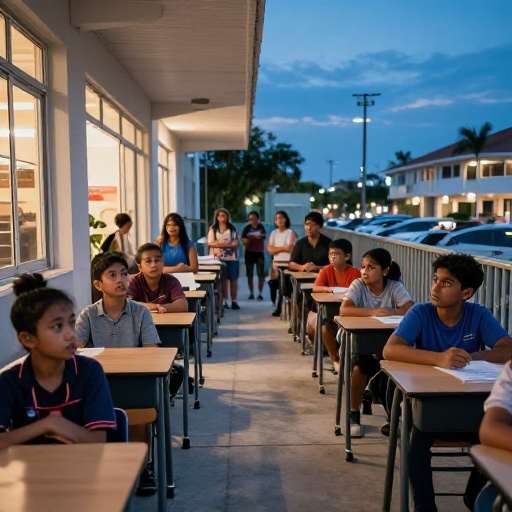
 Imagen generada con IA para Politics
Florida School Districts Plan Closures as Researchers Urge Caution Amid Funding Shifts
Central Florida leaders face tough choices on school consolidations while experts warn of unintended consequences for student communities.
Across Central Florida, the landscape of public education is shifting. As state funding models evolve and enrollment patterns change, several school districts are preparing to announce more closures or consolidations. This trend has sparked a debate between local administrators seeking fiscal responsibility and researchers calling for extreme caution regarding the long-term impact on student communities.
The Push for Consolidation in Orlando and Surrounding Areas
In Orange County, where the Orlando School District operates independently from the larger county system, leadership is evaluating options to streamline operations. The pressure comes as state budgets tighten and per-pupil funding fluctuates. Administrators argue that maintaining under-enrolled schools becomes financially unsustainable when resources are spread too thin, more details at CNN.
This sentiment mirrors trends seen in neighboring districts like Osceola County School District and Seminole County Public Schools. Officials point to declining enrollment in certain neighborhoods due to shifting housing markets as a primary driver for consolidation. When fewer students attend a school, the fixed costs of facilities, transportation, and staff remain high, as we reported in Orlando Residents Face Healthcare Crisis as ACA Premiums Surge Amid Federal Drop.
"We are looking at data that suggests several campuses could benefit from merging resources," said one district source familiar with internal planning documents. "The goal is to ensure every classroom has adequate support without overextending our budget."
Researcher Warnings on Community Impact
Experts argue that schools serve as anchors for local neighborhoods. When a school closes, property values in the immediate vicinity can drop, and families may relocate further away, creating a cycle of declining enrollment elsewhere. Researchers emphasize that short-term savings on operational costs rarely offset long-term losses in community engagement and student achievement.
The Role of State Policy and Local Autonomy
State-level policy changes have given local districts more autonomy but also less predictable funding. The Florida Legislature’s recent decisions on education finance mean counties must make difficult choices without guaranteed state bailouts for operational deficits, as we reported in Orlando Residents Face Healthcare Crisis as ACA Premiums Surge Amid Federal Drop.
In Kissimmee and Sanford, school boards are navigating these waters carefully. They face pressure from taxpayers to reduce spending while simultaneously defending the quality of local programs. The tension is palpable at public meetings, where parents often voice strong opposition to potential closures that would disrupt their children's daily routines.