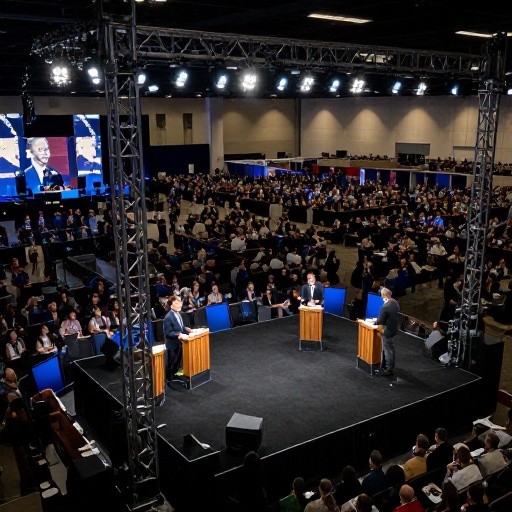
The question of whether Florida’s gubernatorial candidates will share a stage for televised debates remains unresolved as the state approaches its next major election cycle. For David Jolly and Byron Donalds, who are positioning themselves within the political landscape, this uncertainty is not unique but rather a recurring feature of midterm elections across the United States. The dynamics surrounding these high-profile matchups often hinge on strategic considerations rather than simple public demand.
Midterm Election Patterns
In almost every midterm election year, the scheduling and participation in gubernatorial debates become subjects of intense negotiation among campaign teams. This pattern suggests that visibility is carefully managed to maximize voter impact while minimizing exposure to direct comparison on a shared platform. The 2026 race appears to follow this established trend, with no televised debates confirmed at this time, as this newspaper reported in 2026 Florida Gubernatorial Race.
Strategic Implications for Candidates
Candidates like Jolly and Donalds must navigate these ambiguities by balancing media appearances through alternative channels such as interviews, town halls, or digital platforms. The absence of a formal debate stage does not diminish the importance of direct engagement with constituents but shifts the focus to controlled environments where messaging can be more precisely tailored.