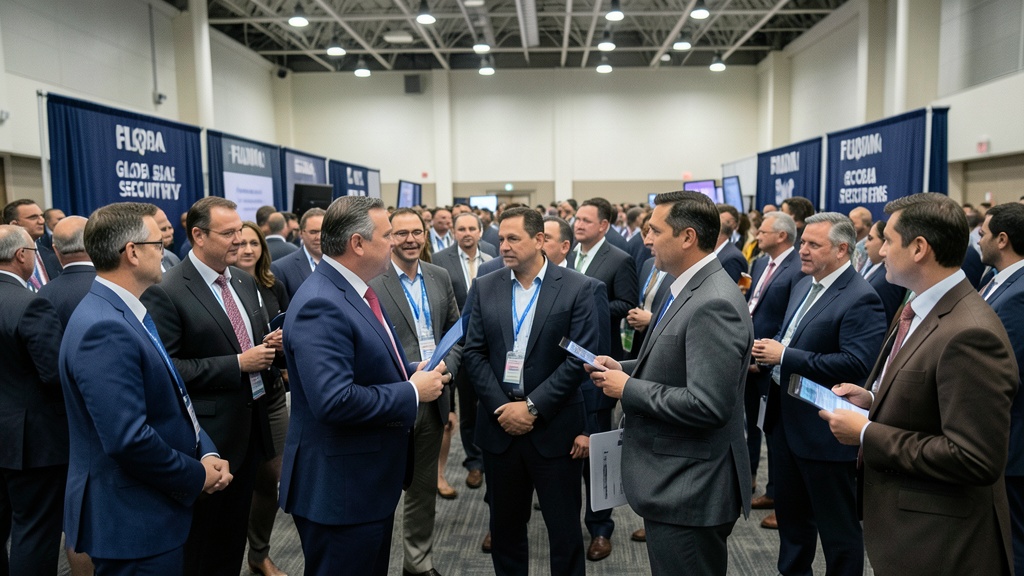
 Imagen generada con IA para Sociedad
Anduril CEO: AI and Autonomous Weapons Will Reshape Modern Warfare
Defense technology leader Brian Schimpf discusses how artificial intelligence is transforming military strategy and autonomous systems.
Anduril Industries has emerged as one of the fastest-growing companies in the defense technology sector, capturing significant attention for its innovative approach to national security. CEO Brian Schimpf recently joined CNBC’s Arjun Kharpal on "Squawk Box" to discuss how artificial intelligence (AI) is fundamentally transforming modern warfare. The conversation highlighted why autonomous weapons are becoming a central component of future military strategies and what this means for the evolving landscape of global defense.
The Role of AI in Modern Defense
During the interview, Schimpf outlined how artificial intelligence is shifting from a theoretical concept to a practical necessity on the battlefield. The integration of AI allows for faster decision-making and more efficient resource allocation in complex combat scenarios. Anduril’s technology focuses on creating interconnected systems that can operate autonomously or semi-autonomously, reducing the burden on human operators while increasing operational speed.
The discussion emphasized that this is not just about replacing traditional hardware but rather enhancing it with intelligent software layers. These AI-driven capabilities are designed to detect threats earlier and respond more effectively than conventional systems alone. This shift represents a significant change in how military forces approach surveillance, targeting, and defense coordination.
Autonomous Weapons and Future Strategy
A key portion of the conversation focused on autonomous weapons systems. Schimpf explained that these technologies are not merely experimental but are actively being developed to meet current geopolitical demands. The company’s approach involves creating platforms that can operate independently in contested environments, where communication links may be disrupted or jammed.
The CEO noted that the speed of technological advancement requires defense contractors to adapt quickly. Anduril has positioned itself at the forefront of this change by leveraging commercial AI advancements for military applications. This strategy allows the company to iterate and deploy new capabilities faster than traditional large-scale defense primes, which often rely on longer procurement cycles, a story we covered in Tredence Launches New AI Engineering Practice for Enterprise Solutions.
Implications for the Defense Industry
The rapid growth of Anduril reflects a broader trend in the U.S. defense industry toward software-defined solutions. As nations face increasingly complex security challenges, there is a growing demand for agile, tech-forward companies that can deliver scalable solutions. Schimpf’s comments to CNBC underscore the belief that AI will continue to be the primary driver of innovation in military technology.
For Central Florida and other regions with significant defense contracting activity, this shift signals potential opportunities in engineering, software development, and systems integration. As autonomous systems become more prevalent, the need for skilled professionals who understand both hardware constraints and AI algorithms will likely increase across the sector.