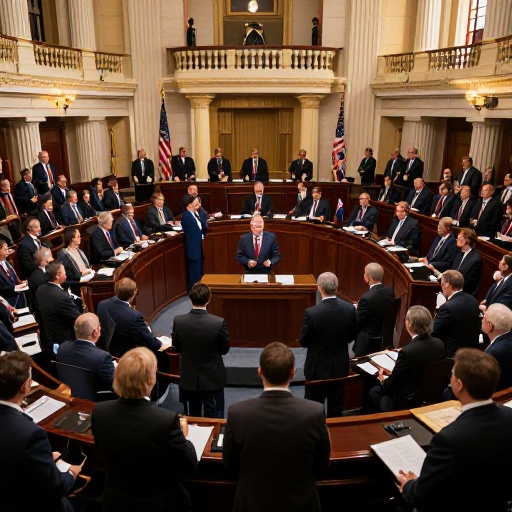
WASHINGTON — In a notable departure from party lines, seven Republican members of the U.S. House of Representatives joined Democrats to pass a critical war powers resolution aimed at restricting President Donald Trump’s ability to sustain military operations in Iran without Congressional authorization. The vote marks one of the most visible instances of internal GOP dissent regarding foreign policy and executive authority during the ongoing geopolitical tensions.
BREAKING PARTY LINES ON FOREIGN POLICY
The resolution specifically targets military engagements that exceed a 60-day threshold without explicit approval from Congress. By passing this measure, lawmakers sought to reassert legislative oversight over decisions traditionally reserved for the executive branch during times of conflict. The vote was not merely symbolic; it represents a direct challenge to the administration's strategy in handling hostilities with Iran.
While the House is currently controlled by Republicans, who hold a majority that typically ensures passage of their preferred agenda, this particular measure passed due to bipartisan cooperation. The seven Republican lawmakers who crossed party lines did so alongside Democratic colleagues, creating an unlikely coalition focused on limiting presidential war powers. This rebellion underscores deepening fractures within the GOP caucus regarding how aggressively to pursue military action abroad.
IMPLICATIONS FOR TRUMP ADMINISTRATION
The passage of this resolution places immediate pressure on the White House to justify continued military involvement in Iran under existing legal frameworks. Historically, war powers resolutions have faced significant hurdles in implementation due to presidential vetoes and political resistance from both parties when national security interests are at stake. However, the explicit vote by Republican representatives signals that a segment of their party is unwilling to grant unchecked authority during prolonged conflicts, as this newspaper reported in Iran Power Struggle May Influence End of US Conflict.
Political analysts note that such rebellions often stem from constituent pressure or ideological disagreements with specific military strategies. For these seven lawmakers, supporting limits on war powers aligns with long-held principles regarding Congressional oversight and the potential risks of open-ended foreign interventions. The vote does not immediately halt operations but establishes a legislative record challenging the administration's legal basis for continued engagement, as this newspaper reported in Iran Power Struggle May Influence End of US Conflict.
LOOKING AHEAD IN WASHINGTON
This event highlights the complex dynamics currently shaping U.S. foreign policy debates in Washington. As tensions with Iran persist, Congress remains a key battleground for determining the scope of presidential authority. The actions of these seven Republican representatives may embolden other lawmakers to question military strategies or demand greater transparency regarding funding and objectives, as noted by The Hill.
Observers will now watch closely to see how the Trump administration responds to this legislative check. Whether through diplomatic negotiations, legal challenges, or strategic adjustments, the White House must navigate a Congress that is increasingly willing to assert its constitutional role in matters of war and peace. The vote serves as a reminder that even within a majority party, dissent can emerge when core principles regarding executive power are challenged.