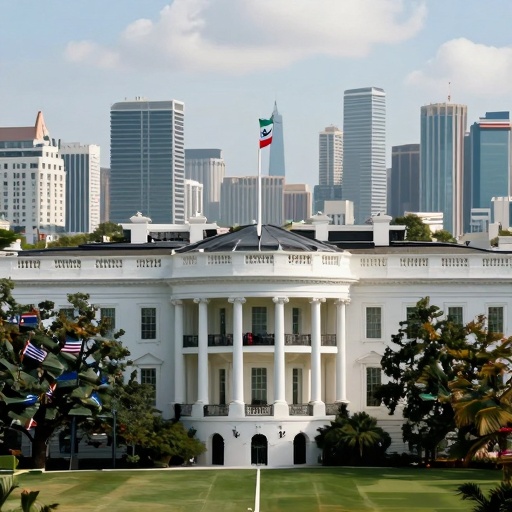
Three Republican members of Congress broke ranks with their party leadership to support a measure aimed at limiting President Donald Trump’s authority over military actions in Iran. This legislative move comes as the conflict between the United States and Iran enters its sixth month, marking a significant moment of internal division within the GOP regarding foreign policy and executive power.
A Symbolic but Significant Vote
The vote was largely symbolic in nature, reflecting the high tensions that have persisted since hostilities began. While the measure did not immediately alter military operations on the ground, it served as a clear statement from these three lawmakers regarding their concerns over the expansion of presidential war powers without explicit congressional authorization.
Political analysts note that such votes often serve to gauge public sentiment and pressure party leadership. In this instance, the dissenting Republicans aligned with Democratic colleagues who have long argued for stricter legislative oversight on military engagements. The vote underscores a growing rift within the Republican Party concerning how best to handle prolonged international conflicts.
Context of the Iran Conflict
The ongoing situation in Iran has been a focal point of national security discussions for months. As the conflict reaches its sixth month, questions regarding the duration and scope of U.S. involvement have intensified among lawmakers across the political spectrum. The attempt to limit Trump’s powers was driven by concerns that unchecked executive authority could lead to prolonged military entanglements without adequate democratic checks, as this newspaper reported in Three Republicans Break Ranks to Limit Trump's War Powers Over Iran.
Historically, Congress has sought to reclaim its role in declaring war through measures like the War Powers Resolution. This latest effort mirrors those historical precedents, aiming to reassert legislative intent even when faced with an active and evolving geopolitical crisis. The three Republicans who voted against their party’s stance highlighted the difficulty of maintaining unity during extended periods of international tension.
Implications for Future Policy
This break in ranks may influence future debates on military funding and authorization. Lawmakers are increasingly attentive to how such symbolic votes translate into actual policy changes or public perception. While the immediate impact on the ground in Iran remains unchanged, the political signal sent by these three Republicans could affect upcoming legislative negotiations regarding defense spending and foreign aid.
As the administration continues its operations, this event highlights the complex balance between executive action and congressional oversight. The dissenting voices argue that sustained military engagement requires broader consensus, a principle they believe is essential for long-term national stability.