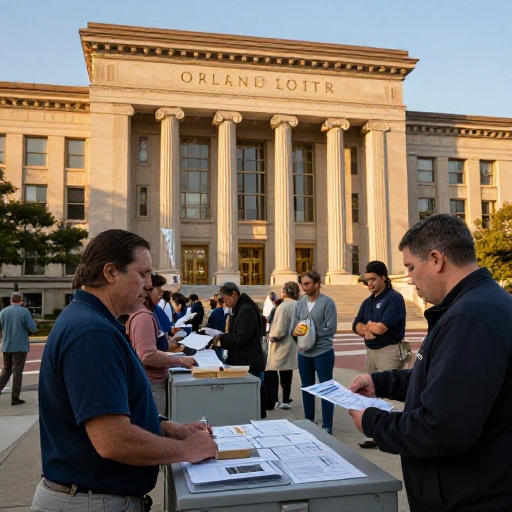
ORLANDO, Fla. — As Central Florida residents prepare for future elections, a significant legal question regarding mail-in voting is making its way toward the U.S. Supreme Court. The case centers on President Donald Trump’s executive order aimed at securing the integrity of mail ballots by requiring tamper-resistant envelopes. While proponents argue this measure protects against fraud, critics and legal experts warn that the path to implementation may not be straightforward.
The Core Legal Dispute
At the heart of the controversy is whether the United States Postal Service (USPS) has the statutory authority to enforce these specific security measures without explicit congressional approval. The executive order, signed by President Trump in his first term and potentially referenced for future electoral cycles including 2028, directs federal agencies to work with postal services to enhance ballot security.
However, legal scholars suggest that the Supreme Court must determine if this directive falls within the existing powers of the Postal Service or if it constitutes an overreach requiring new legislation. This distinction is crucial for Orlando and Kissimmee residents who rely heavily on mail-in voting due to high population turnover and transient communities.
"It’s not a slam dunk," noted one legal analyst familiar with postal law. "The court will have to decide if the USPS can mandate specific envelope standards independently or if it needs clear legislative backing." This ambiguity creates uncertainty for election officials in Orange County who are tasked with implementing these rules.
Impact on Central Florida Voters
For voters in Orlando, Winter Park, and Sanford, mail-in voting is a convenient option that accommodates busy schedules and weather-related disruptions. The I-4 corridor sees significant voter engagement during national elections, making the security of these ballots a local priority.
If the Supreme Court rules against the Postal Service’s authority to enforce tamper-resistant envelopes, election administrators may face logistical challenges in securing mail-in ballots without violating existing statutes. Conversely, if the court upholds the executive order, it could set a precedent for stricter federal oversight of state-level voting procedures.
Local officials emphasize that regardless of the legal outcome, voter confidence remains paramount. "We want every Orlando resident to feel confident in their vote," said a representative from the Orange County Supervisor of Elections office. "Clarity on these rules helps us prepare better for future elections, a story we covered in Orlando Lawmakers React to Supreme Court Ruling on Trump Mail."
The 2028 Election Context
As political strategists look ahead to the 2028 presidential election, the outcome of this Supreme Court case will likely influence campaign strategies and voter outreach efforts. A ruling that empowers federal agencies could lead to more uniform voting standards across states, while a rejection might encourage state-level initiatives to fill any regulatory gaps.
In Florida, where early voting has become increasingly popular, the reliability of mail-in systems is closely watched by both Democratic and Republican campaigns. The potential for legal challenges over ballot security measures could affect how parties allocate resources for voter education and assistance programs.
"The stakes are high not just for national politics but for local communities that depend on accessible voting methods."
Election experts in Central Florida note that any changes to mail-in protocols must be communicated clearly to voters. Misinformation about ballot requirements can suppress turnout, particularly among first-time and elderly voters who may find new envelope standards confusing.
Looking Ahead
The Supreme Court’s decision will likely come with detailed reasoning that could affect other federal agency actions beyond voting. For now, Orlando residents are advised to stay informed through official county channels for any updates on ballot procedures.
As the legal battle unfolds, it serves as a reminder of the ongoing tension between security and accessibility in American democracy. Whether this case becomes a landmark ruling or is resolved through legislative compromise remains to be seen, but its implications for Central Florida’s electoral landscape are already being felt by local officials and voters alike.