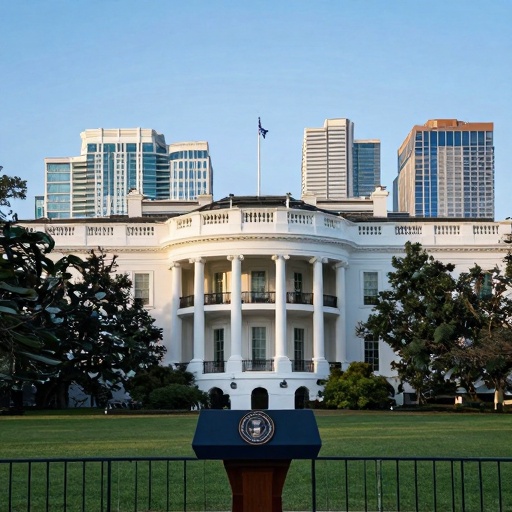
Trump Uses Emergency Powers to Support Coal with $700M
El presidente invoca la Ley de Producción Defensiva para financiar plantas y terminales, generando debate sobre impacto ambiental.
WASHINGTON, June 4 (Reuters) - President Donald Trump announced Thursday that he will invoke Cold War-era emergency powers to direct nearly $700 million to help the U.S. coal industry. This initiative seeks to facilitate shipping this carbon-intensive fuel to Asia and support power companies for burning it domestically.
Use of the Defense Production Act
The Trump administration plans to use the Defense Production Act, a 1950 law that grants broad presidential authority over industries deemed critical to national security. The funds will be used to modernize more than a dozen coal-fired power plants, finance two new facilities and support construction of a coal export terminal on the West Coast.
The government has framed this energy policy as a matter of national security, arguing it is necessary to ensure electricity supply for artificial intelligence (AI) data centers and reduce dependence on other countries. During his announcement from the Oval Office, Trump was joined by Interior Secretary Doug Burgum, Energy Secretary Chris Wright, and Republican governors Mark Gordon of Wyoming and Patrick Morrisey of West Virginia.
Political and Economic Reactions
Tokyo and Taiwan have shown interest in acquiring coal from Wyoming, Governor Gordon said. Meanwhile, the opening of the port was described as essential for the state economy, given that it is the country's largest coal producer.
"It is absolutely essential to our state's way of life," Mark Gordon said about the proposed terminal.
- Governor Mark Gordon of Wyoming
Environmental Debate and Historical Context
The plan has received immediate condemnation from environmental advocates, who point out that coal particulate emissions are linked to health problems such as heart and lung disease. Patrick Drupp, climate policy director at the Sierra Club, characterized the measure as a taxpayer-funded subsidy for a polluting industry.
"It is repugnant and reprehensible that the President of the United States is giving away our dollars to deadly and costly coal plants," said Drupp. On the other hand, Rich Nolan, CEO of the National Mining Association, stated that these funds would strengthen production of a fuel that helps insulate consumers from energy price volatility.
Sector Decline
Despite these measures and relaxed environmental regulations under Trump, the industry faces structural challenges. Coal, responsible for more than half of U.S. electricity generation in 1990, now produces less than one-fifth as utilities shift toward cheaper natural gas and renewable energy, a story we covered in Trump tells Carney Canada must control wildfires.
According to the St. Louis Federal Reserve, the number of active coal miners has decreased from approximately 51,500 in 2017 to about 39,800 last year. Most funding will be used to upgrade 13 existing plants, with additional funds for facilities in Alaska, Maryland and West Virginia, as well as for the West Gateway export terminal in northern California.