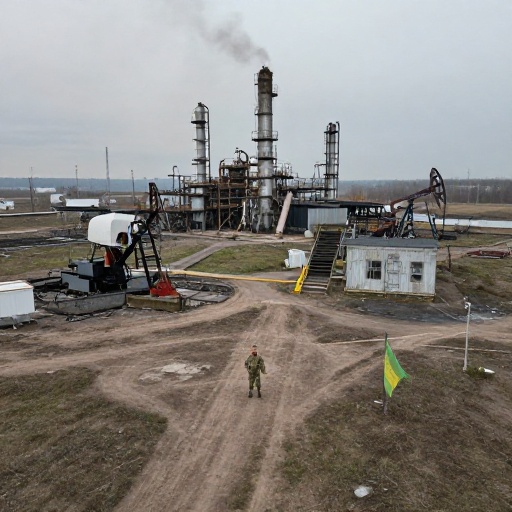
President Donald Trump has publicly called on Ukrainian President Volodymyr Zelenskyy to halt military strikes against Russian diesel fuel infrastructure, arguing that these attacks are contributing significantly to a global fuel shortage. Speaking to reporters in Ireland, Trump stated, “Mr. Zelenskyy has to do one thing. He has to stop knocking out diesel fuel in Russia.” The request marks a shift in diplomatic pressure, asking Kyiv to curtail one of its principal means of imposing economic and logistical pressure on Moscow.
Disputing the Source of Global Shortages
While Trump attributed current energy market disruptions directly to Ukrainian actions, he explicitly denied that the ongoing conflict with Iran in the Middle East is responsible for the crisis. “This isn’t done by the Middle East,” Trump claimed during his remarks. However, this assertion contradicts data from major energy organizations. The International Energy Agency has identified the war in the Middle East as the principal source of broader global supply shocks, noting that markets are dealing with their largest historical disruption resulting from the near closure of the Strait of Hormuz, as reported by El Comercio.
Impact on Global Markets and Ukraine
The strategic implications of Trump’s request are significant for Kyiv. Olena Lennon, a Practitioner in Residence at the University of New Haven, argues that ending these attacks would deprive Ukraine of an effective source of leverage against Russia. She notes that disrupting Russian oil funding weakens Moscow's war machine and that removing this pressure point could lead to increased Ukrainian casualties. Meanwhile, Zelenskyy has previously stated on X that every dollar paid for Russian oil funds the war effort, as this newspaper reported in Trump Posts Images Seizing Iranian Oil Tanker Amid Regional Tensions.
Broader Energy Context
The global diesel squeeze is driven by multiple factors beyond Eastern Europe. Disruptions in Central Asia have seen retail gas prices rise by up to 25% due to Moscow’s export restrictions. In Brazil, President Luiz Inácio Lula da Silva introduced tax cuts on gasoline and subsidies for diesel producers as the U.S.-Iran war drove up global oil prices. Additionally, the Strategic Petroleum Reserve in the United States is at its lowest level since 1982, holding just 285.4 million barrels as of September, as this newspaper reported in Trump Posts Images Seizing Iranian Oil Tanker Amid Regional Tensions.
Escalating Tensions in the Middle East
Tensions remain high following recent developments in Yemen and Saudi Arabia. Houthi rebels have taken control of key ports and islands vital to shipping through the Red Sea, threatening further oil price increases. A critical pipeline in Saudi Arabia was struck by drones from Iraq, leading to its closure and raising fears that up to 4% of global oil supply could be removed if it does not restart quickly.