President Donald Trump has once again drawn sharp criticism for his casual remarks regarding American casualties in the ongoing conflict with Iran, describing the war and its human toll as merely "small potatoes." The comments come at a time when local communities across Orlando and Central Florida are closely monitoring federal military engagements that directly impact families stationed overseas or connected to regional defense contractors.
The remark was made during a recent press interaction where reporters pressed Trump on the escalating tensions in the Middle East. Despite reports indicating that 18 American service members have died in the conflict, and while the aircraft carrier USS Abraham Lincoln underwent a record-long deployment at sea, the President minimized the severity of the situation.
"It's small potatoes," Trump stated when confronted with the rising death toll and the strategic risks involved. This characterization has sparked immediate backlash from military families in Orange County, as well as local political figures who argue that such language undermines the sacrifices made by service members stationed at bases like MacDill Air Force Base nearby.
Local Reactions to Federal Military Policy
In Orlando, where a significant portion of the population has ties to military service or defense industries, the President's words have been met with skepticism. The I-4 corridor is home to numerous veterans and active-duty personnel whose families are affected by overseas deployments.
Local analysts note that while Trump often uses hyperbolic language for political effect, dismissing war casualties as "small potatoes" risks alienating the very constituents who support his national security platform. The USS Abraham Lincoln's extended deployment highlights the logistical strain on military resources, a concern echoed by defense experts in Winter Park and Kissimmee.
Community leaders emphasize that behind every statistic is a family impacted by loss or separation. For residents of Sanford and Daytona Beach, whose economies rely partly on tourism linked to national stability, such rhetoric raises questions about the long-term implications of military engagement without clear exit strategies.
Economic and Security Implications for Central Florida
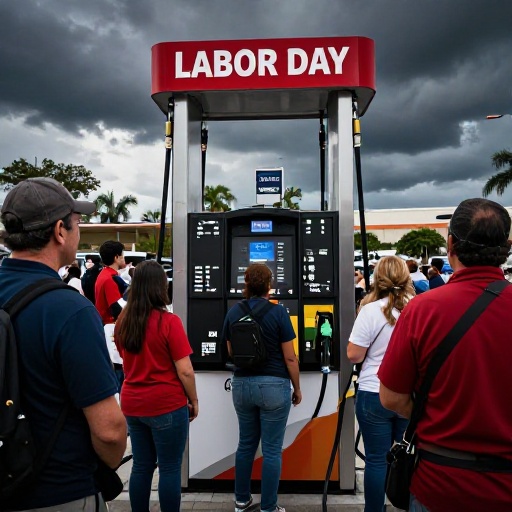
The conflict in Iran has broader economic ripples that extend beyond Washington. As oil prices fluctuate due to Middle Eastern tensions, local drivers in Orlando feel the pinch at the pump. The theme park industry, a cornerstone of Orange County's economy, remains sensitive to global stability, a story we covered in Trump Eyes Life After 2028 While Orlando Tracks Local Economic Shifts.
Universal and Disney parks rely heavily on international tourism. Any escalation in geopolitical conflict can lead to travel advisories that deter visitors from Europe and Asia. While Trump downplays the war as "small potatoes," local business owners are preparing for potential disruptions in supply chains and visitor numbers.
Furthermore, the defense sector employs thousands across Central Florida. Companies tied to naval operations or aerospace manufacturing benefit from increased military spending but face risks if diplomatic relations deteriorate further. The record deployment of the Abraham Lincoln signals a sustained commitment that could lead to longer-term budgetary commitments in Washington.
Ongoing Tensions and Future Outlook
As tensions remain high, local officials are urging calm while advocating for transparency regarding military operations. The Orange County Commission has not issued formal statements but is monitoring federal developments closely.
The debate over Trump's characterization of the war highlights a growing divide between political rhetoric and on-the-ground realities. With 18 American deaths confirmed, many in Central Florida argue that such losses deserve respectful acknowledgment rather than dismissal.
Residents are encouraged to stay informed through official channels as the situation evolves. The impact of foreign policy decisions continues to resonate locally, affecting everything from insurance rates to community safety perceptions. As the administration navigates these complex geopolitical waters, Orlando remains watchful, balancing support for troops with concerns over national direction.