Time Bomb Near London: WWII Shipwreck With 1,500 Tons Of Munitions Poses Ongoing Threat
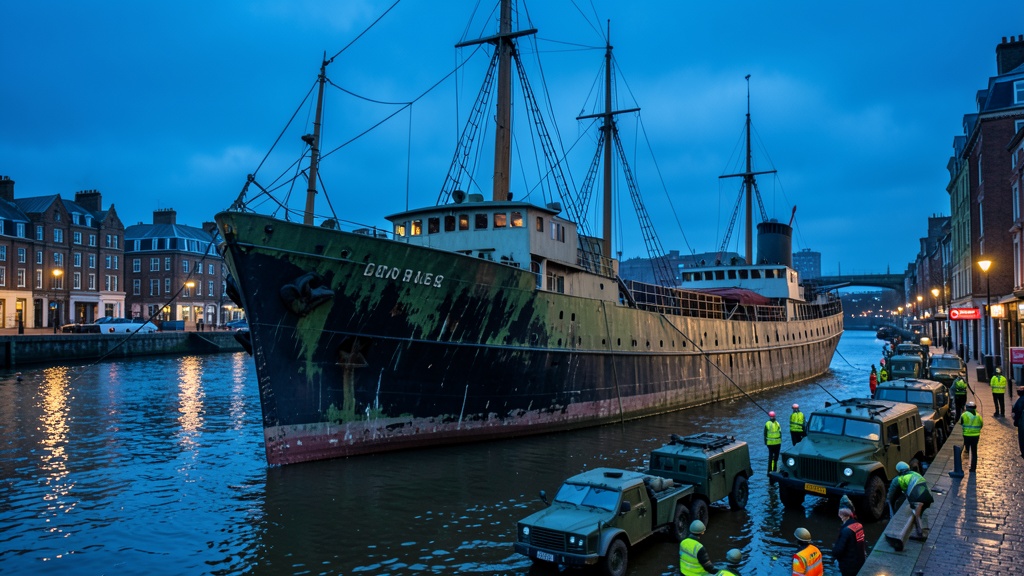
Salvage crews work to stabilize the SS Richard Montgomery, a sunken vessel carrying dangerous explosives near the Thames Estuary.
The waters of the Thames Estuary hold more than just maritime history; they contain a dormant threat that has loomed over local communities for nearly eight decades. The SS Richard Montgomery, a Liberty ship that sank in 1944 shortly after D-Day, remains anchored to the riverbed with approximately 1,500 tons of munitions still inside its hull.
This massive cache of World War II explosives has transformed the wreck into what officials and historians alike describe as a "time bomb." The presence of these unexploded ordnance items continues to pose significant safety risks to nearby shipping lanes, coastal communities, and the broader region surrounding London. Recent efforts by salvage crews have focused on stabilizing the vessel to prevent accidental detonation or further structural failure.
A Historic Disaster in the Thames
The SS Richard Montgomery was part of a convoy transporting supplies essential for the Allied war effort when it ran aground near the Goodwin Sands in August 1944. Despite salvage attempts, the ship eventually broke apart and sank into the mudflats of the estuary. At the time, it carried an estimated 1,500 tons of high explosives, including depth charges, bombs, and other munitions.
While many ships from that era have been salvaged or left to rust quietly on the seabed, the Richard Montgomery stands out due to the sheer volume and volatility of its cargo. The wreck sits in a busy shipping lane, making any accidental disturbance potentially catastrophic for maritime traffic operating near London’s ports.
For decades, authorities have monitored the site closely. The British government has repeatedly assessed the risk posed by the corroding hull and shifting explosives. Although no major incident has occurred since 1944, the potential consequences of a large-scale explosion remain severe enough to warrant ongoing vigilance and specialized intervention.
Salvage Operations And Safety Measures
In recent years, dedicated salvage teams have worked tirelessly to stabilize the SS Richard Montgomery. These operations involve complex engineering solutions designed to secure the hull and prevent further movement of the munitions within it. The goal is not necessarily immediate removal but rather long-term containment.
Experts note that removing 1,500 tons of explosives from such a fragile environment would be extremely dangerous and logistically challenging. Instead, stabilization techniques aim to isolate the wreck from external forces like strong currents or ship anchors. This approach minimizes the risk of accidental detonation while allowing normal maritime activities to proceed with caution, more context in USS Theodore Roosevelt Heads to Middle East Amid Rising Tensions.
Local authorities continue to enforce exclusion zones around the site during sensitive operations. Shipping vessels are advised to maintain safe distances, and recreational boaters often receive warnings about avoiding the area entirely. These measures reflect a balance between honoring historical preservation and ensuring public safety in one of Europe’s busiest waterways.
Community Impact And Historical Significance
The SS Richard Montgomery is not just an engineering challenge; it serves as a poignant reminder of World War II’s lasting impact on modern infrastructure. For residents living near the Thames Estuary, the wreck represents both a historical artifact and a persistent hazard.
Historians emphasize that studying such wrecks provides valuable insights into wartime logistics and naval engineering failures. However, they also caution against romanticizing the dangers involved in handling unexploded ordnance decades after conflicts end. The emotional weight of discovering live explosives near populated areas cannot be overstated for local communities.
As climate change alters sea levels and weather patterns intensify around coastal regions like London’s estuaries, concerns about how environmental factors might affect the stability of submerged munitions grow stronger. Rising tides could expose previously buried sections of the wreck or shift its position further into active shipping lanes.