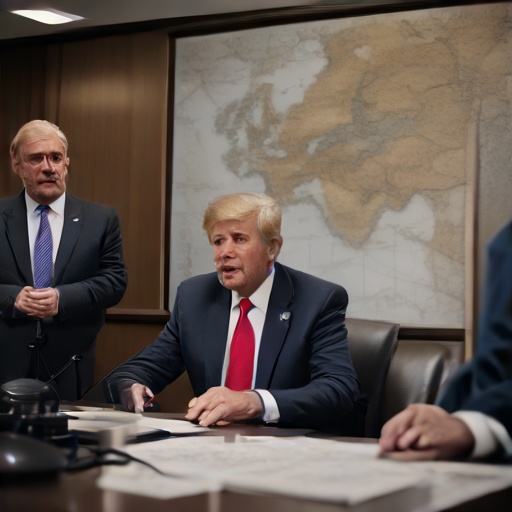
 Imagen generada con IA para Sociedad
Global Tensions: Iran Prepares and Trump Visits China
Mientras las negociaciones de paz se estancan, Irán afirma estar listo para un nuevo ataque estadounidense y Trump se reúne con Xi Jinping en Beijing.
In a moment of high geopolitical tension, U.S. President Donald Trump met in Beijing with his Chinese counterpart, Xi Jinping, to discuss the stabilization of commercial relations and the ongoing conflict with Iran. Before the meeting, Trump stated that he expected a "long conversation" about the war, which has lasted 75 days and severely impacted the global economy. Meanwhile, an Iranian commander claimed that military maneuvers in Tehran have demonstrated the country's willingness to confront any new U.S. attack "anywhere and at any time," while diplomatic efforts for a peace agreement appear stalled.
Economic Costs and Naval Blockade
The financial impact of the conflict has been significant. The Pentagon's interim comptroller, Jules Hurst, informed legislators that the war has cost U.S. taxpayers $29 billion to date. Previously, Defense Secretary Pete Hegseth had estimated a cost of $25 billion, although U.S. officials suggested spending could approach $50 billion. Additionally, U.S. Central Command confirmed that since the blockade of Iranian ports began on April 13, passage has been allowed for 15 humanitarian aid vessels, while 67 commercial ships have been redirected.
Diplomacy with China and the United Arab Emirates
Secretary of State Marco Rubio stated during a trip aboard Air Force One that it is in China's interest to help resolve the war due to its dependence on Persian Gulf oil. Rubio warned that any support from Beijing for Iran would be detrimental to bilateral relations. On another diplomatic front, Israeli Prime Minister Benjamin Netanyahu’s office claimed he visited the United Arab Emirates to achieve a "historic breakthrough," but the Emirati government later denied any secret visit, reaffirming that their relationships are based on the Abraham Accords, as this newspaper reported in Trump Weighs Escalation as Iran Prepares Ground Forces.
Regional Context and Inflationary Tensions
Meanwhile, new peace talks between Israel and Lebanon are being prepared in Washington as the current ceasefire approaches its end. On another front, Vice President JD Vance defended the priority of preventing Iranian nuclear proliferation, although he admitted that inflation figures are not favorable, reaching an annual rate of 3.8% in April. These simultaneous tensions in the Middle East and Asia reflect the complex challenges facing the current administration regarding national security and global economic stability.