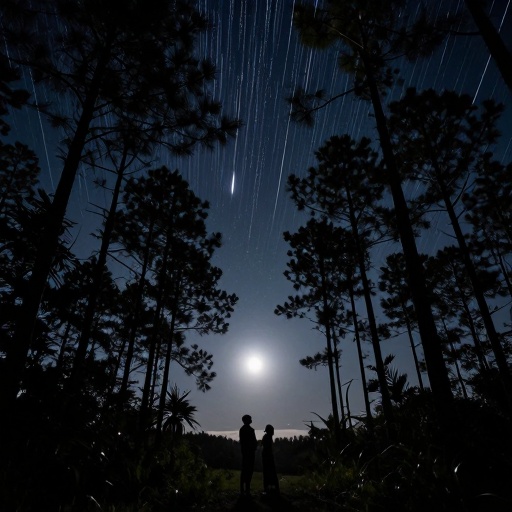
Perseids Peak Tonight: New Moon Boosts Visibility Across Central Florida
Residents across Central Florida have a rare astronomical opportunity tonight as the Perseid meteor shower reaches its peak against the backdrop of a new moon. According to USA TODAY NETWORK - Florida, this alignment offers some of the best viewing conditions for stargazers in the region. While a total solar eclipse is also occurring on Wednesday, Aug. 12, it will not be visible from Florida, leaving the meteor shower as the primary celestial event for local observers.
Optimal Viewing Times and Conditions
The new moon phase means the sky will be significantly darker than usual, enhancing visibility of the meteors. The American Meteor Society notes that the Perseids are highly popular because they peak on warm August nights in the northern hemisphere. Activity began on July 17 and remains active through Aug. 24, with a strong maximum expected tonight or tomorrow.
For those planning to watch, the National Weather Service predicts clear skies over Florida tonight, providing ideal conditions. The best time to view the shower is between midnight and dawn when light pollution is at its lowest. However, meteors can appear as early as 10 p.m. local time according to NASA. Viewers are advised to find locations with minimal artificial lighting to maximize their chances of spotting dozens of meteors whizzing through the sky.
Dark Sky Locations Near Orlando
To get the most out of this celestial display, observers should travel away from city lights in Orange and Osceola counties, a story we covered in Strong Storms Hit South Florida; More Rain Expected This Week. Florida is home to three designated Dark Sky locations that offer superior viewing experiences:
- Groveland (Lake County): Located about 30 miles west of Orlando.
- Kissimmee Prairie Preserve State Park: Situated approximately 25 miles north of Okeechobee, offering a rural setting for stargazing.
- Big Cypress National Preserve: Located in Ochopee in South Florida within the Everglades region.
Moon Phases and Future Events
Tonight, Aug. 12, the moon will be between 0% and 1% illuminated, marking the new moon phase where it is effectively invisible to the naked eye. This darkness allows for clearer observation of the meteor shower. The next full moon, known as the Sturgeon Moon, will peak on Friday, Aug. 28, at 12:18 a.m. ET.
While today's total solar eclipse is not visible from Florida—with its path crossing Greenland, Iceland, Spain, Russia, and parts of Portugal—residents can still follow the event via livestreams provided by NASA starting at 1:15 p.m. ET. The next time a total solar eclipse will include Florida in its path of totality is projected for the year 2045.