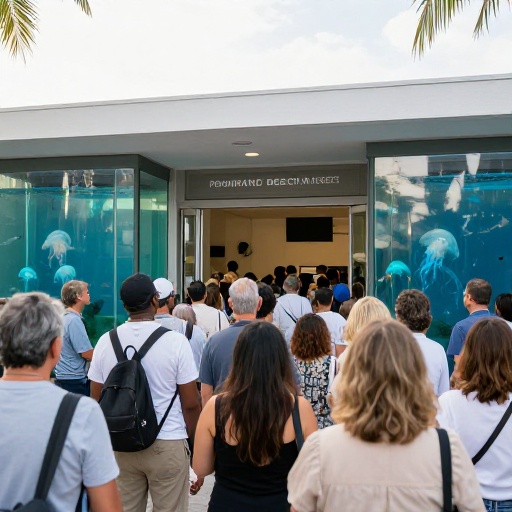
POMPANO BEACH, Fla. — The Jellyfish Museum has opened its doors in Pompano Beach, Florida, marking a significant addition to the region's tourism landscape. Located just north of Fort Lauderdale along the I-95 corridor, this private facility is believed to be the first museum in the United States dedicated solely to translucent invertebrates and one of very few such spaces globally.
A Unique Marine Experience
The nearly 10,000-square-foot attraction houses approximately 20 unique species of jellyfish found in Florida waters and other parts of the world. The museum's design emphasizes calm and tranquility, with a dark space lit primarily by images projected on walls and the glowing light from saltwater tanks. Visitors can observe hypnotic patterns as floating tentacled predators pulse and swirl.
Current occupants include Japanese sea nettles, moon jellyfish, spotted jellies, and upside-down jellyfish, which are commonly found among Florida’s mangrove swamps. Different species rotate through the museum's 21 tanks to keep the exhibits fresh for repeat visitors. The jellyfish are acquired through licensed aquaculture partners, ensuring ethical sourcing.
From Ukraine to South Florida
The facility was created by Alex and Yana Yanovsky, a couple who previously developed successful aquariums in Ukraine, including their first jellyfish museum in Kyiv. According to operations manager Jessica Eisenbarth, the couple left those facilities behind when they fled Ukraine following the 2022 Russian invasion.
"When they left Ukraine, they moved to Florida, and then they immediately wanted to share their passion here," said Eisenbarth. "Jellyfish are some of the most resilient creatures on Earth... Their movement is mesmerizing, almost meditative, and they play an important role in marine ecosystems."
The space opened this past spring as the couple’s first aquatic attraction since immigrating to the U.S., though they have expressed desires to expand. The museum was converted from a former Wells Fargo bank branch with approximately $100,000 in community redevelopment grants provided by the city of Pompano Beach.
Education and Conservation
Jellyfish are ancient creatures that have survived for over 500 million years, predating dinosaurs and even trees. They lack a heart or brain, consisting primarily of water which gives them their translucent appearance. Yana Yanovsky developed the concept after noticing how popular jellyfish were at her previous aquariums, as this newspaper reported in Florida Reports First Vibrio Death in Palm Beach County.
General manager Iryna Pelypkanych noted that guides teach visitors about the role jellyfish play in marine ecosystems and the importance of protecting them. "The biggest idea here is to leave people with the feeling that they know something more about the population of jellyfish," Pelypkanych said, noting that around 4,000 different species can be classified as jellyfish.
Broader Context
The concept aligns with a growing trend in marine education. Monty Graham, director of the Smithsonian Environmental Research Center, credited California’s Monterey Bay Aquarium for kicking off this popularity by beginning temporary displays in 1985 and opening a permanent gallery in 1996.