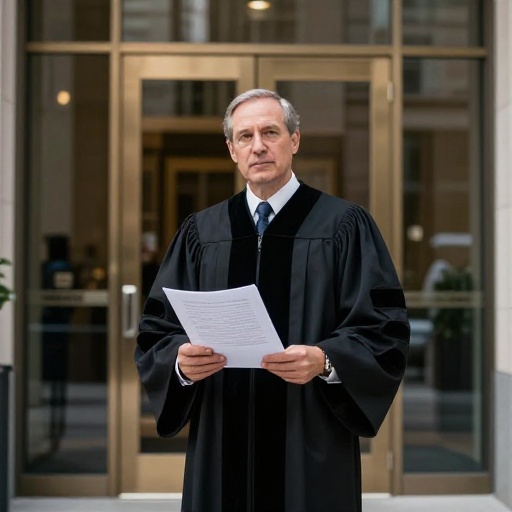
An emergency motion has been filed in federal court seeking to block President Donald Trump from having his name carved into a prominent Washington D.C. landmark. The request targets the U.S. Institute of Peace (USIP) building, an independent agency located near the National Mall.
The legal filing argues that the administration’s plan to inscribe the president's name onto the structure lacks statutory authority and violates historic preservation standards. This development adds another layer to the ongoing political and legal battles surrounding Trump’s use of federal properties for personal branding purposes.
Legal Challenges Mount Against Presidential Branding
The emergency motion was filed by a coalition of historians, architects, and former government officials who oppose the alteration. They argue that carving a president's name into an existing landmark sets a dangerous precedent for executive overreach regarding public spaces.
Attorneys representing the challengers contend that no law explicitly grants the president the power to permanently alter historic buildings in this manner. The motion emphasizes that the USIP building, while federally owned or leased, serves as a neutral space for international conflict resolution and should remain free of partisan markings.
The Controversy Over the U.S. Institute of Peace Site
At the center of this dispute is the specific location chosen by the Trump administration: the building housing the U.S. Institute of Peace. This site has historical significance, having previously served as the British Embassy in Washington D.C.
The structure itself is a designated historic landmark. Preservation groups argue that altering its facade to include "Donald J. Trump" would irreparably damage its architectural integrity and historical value. The move mirrors previous efforts by the administration to rename federal buildings, such as renaming Fort Bragg after General Thomas “Stonewall” Jackson, more context in Trump Arch Groundbreaking Sparks Legal Battle in D.C..
However, critics point out that carving a name into stone is permanent in a way that simply changing a plaque’s text might not be perceived. This physical alteration raises stakes for historic preservation advocates who view the act as an attempt to cement Trump’s legacy through irreversible means.
Broader Implications for Federal Property Use
This legal battle is part of a larger pattern involving the Trump administration’s aggressive approach to federal property. The White House has previously attempted to rename military bases, airports, and other landmarks after political allies or historical figures favored by the president.
The current emergency motion suggests that opponents are gaining traction in courtrooms across the country. Legal experts note that if successful, this ruling could establish a significant precedent limiting presidential authority over historic sites managed by federal agencies.
Furthermore, the involvement of an independent agency like USIP complicates the legal landscape. As a semi-autonomous body created by Congress to promote peace abroad, its leadership and facilities are subject to specific congressional guidelines that may restrict such alterations without legislative approval.