DOJ Probes Major Networks Over Pool Coverage Decision Regarding President Trump
Justice Department investigates five top TV news outlets for alleged antitrust violations in suspending presidential press pool access.
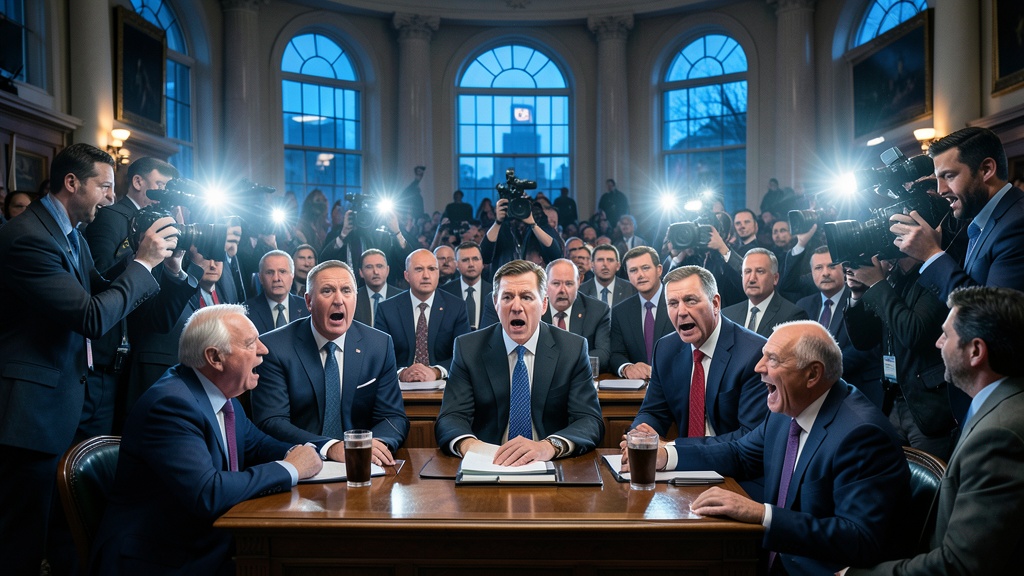
The U.S. Department of Justice has launched an investigation into five major television networks regarding their recent decision to suspend "pool" coverage of President Donald Trump. According to reports from Variety, the federal probe centers on whether these news organizations colluded to violate antitrust laws by collectively restricting press access.
This development marks a significant escalation in the ongoing tensions between the White House and major media outlets. The DOJ’s interest suggests that government officials view the coordinated suspension of pool coverage not merely as an editorial decision, but potentially as an illegal restraint of trade among competing broadcasters.
The Nature of Pool Coverage
To understand the gravity of this investigation, one must first understand what "pool" coverage entails. In high-security environments such as the White House or during presidential travel, it is logistically impossible for every journalist to accompany the president at all times.
Instead, a small group of reporters and camera operators are selected to form a "press pool." These individuals have exclusive access to the president’s movements. They then share their footage with other news organizations that did not gain direct access. This system ensures that all media outlets can report on presidential activities while maintaining security protocols.
The five networks under scrutiny include major national broadcasters who typically rely heavily on this shared pool footage for their evening and morning news segments. By suspending participation in the pool, these networks effectively removed themselves from generating original visual content of the president’s daily schedule during the disputed period.
Antitrust Allegations
The core of the DOJ’s probe appears to be an antitrust investigation. Under U.S. law, competitors are generally prohibited from agreeing on terms that limit competition or restrict market access. The Justice Department is reportedly examining whether the decision to suspend pool coverage was a coordinated effort designed to leverage pressure against the White House rather than independent editorial choices.
If proven true, such coordination could be interpreted as an illegal conspiracy among rival businesses. This legal theory transforms what might otherwise be seen as journalistic protest into potential corporate collusion. The investigation will likely focus on communications between network executives and editors leading up to the suspension decision.
Political Context and White House Stance
This probe emerges during a period of heightened friction between the Trump administration and mainstream media organizations. President Trump has frequently criticized major news networks, accusing them of bias and unfair treatment. The recent dispute over pool coverage likely stems from specific incidents where access was denied or restricted by White House press staff, a story we covered in Justice Dept Defends Ban on Reporters Near Trump Projects and Iran War Coverage.
The decision to involve the Department of Justice represents a novel strategy in this conflict. Rather than relying solely on public relations battles or social media criticism, the administration is utilizing federal legal mechanisms to penalize what it views as anti-competitive behavior. This approach signals that the government may be willing to use regulatory power to enforce press access.
Legal experts note that proving antitrust violations in this context would be challenging. Courts have historically protected editorial discretion, allowing news organizations to decide how and when they report stories. However, the DOJ’s willingness to investigate suggests a aggressive interpretation of these boundaries.
Implications for Press Freedom
The outcome of this investigation could set a precedent for future interactions between the government and the press. If networks are found liable for coordinating pool suspensions, it may chill their ability to collectively protest against White House policies in the future.
Conversely, if the probe is dismissed, it reinforces the notion that editorial decisions regarding access remain within the purview of private media companies. The case highlights the fragile balance between national security protocols and the public’s right to information.
As the investigation proceeds, all eyes will be on how major networks respond. Their legal teams must now defend not just their journalistic practices, but also their business communications against potential federal charges. This situation underscores the increasingly litigious nature of modern political journalism in Central Florida and beyond.