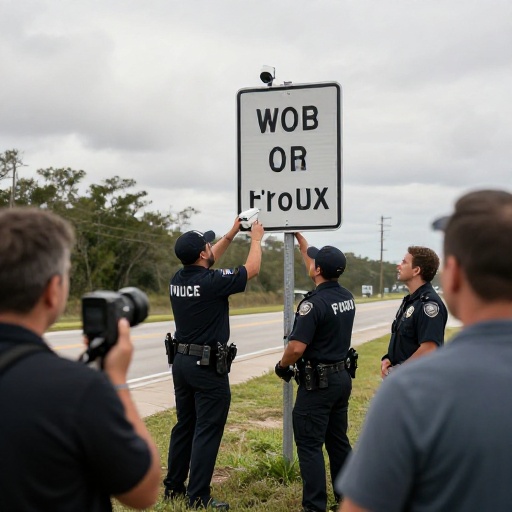
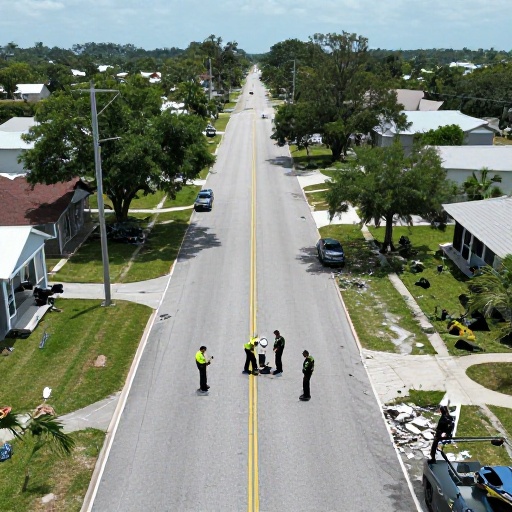
 Imagen generada con IA para Security
Central Florida Police Remove High-Tech Cameras After State Order
Law enforcement leaders warn that dismantling license plate readers will hinder crime-fighting efforts and the search for missing persons across Orlando and surrounding counties.
Central Florida law enforcement agencies are dismantling networks of high-tech automated data-gathering cameras following a directive from the state government. The order, issued by the Florida Department of Transportation (FDOT), mandates that Flock Safety cameras and similar license-plate readers be removed from state roads. By Tuesday, September 2, 2026, agencies in Osceola, Lake, Seminole, and Volusia counties had begun taking down these devices, which have become ubiquitous on Florida streets over the past few years.
State Mandate vs. Local Safety Concerns
The de-escalation of this technology comes after Governor Ron DeSantis labeled the widespread deployment as "out of control" and a threat to Floridians' sovereignty. A memo from FDOT cited instances of misuse, data privacy concerns, and fears of creating a surveillance state as reasons for immediate action. The order specifically targets cameras on state roads, including major thoroughfares in Orange County such as Semoran Boulevard, Colonial Drive, Orange Blossom Trail, Conway Road, and Alafaya Trail.
However, law enforcement leaders have warned that ending the use of these high-tech cameras will significantly hurt crime-fighting efforts. Sheriff Mina of the Orange County Sheriff’s Office stated recently that losing this technology would be a "big win for criminals" and a huge detriment to public safety. His agency currently operates 160 cameras at an annual cost of $158,000. Despite the state order, the Orange County Sheriff's Office intends to comply with FDOT’s directive while continuing to use license plate reader (LPR) technology where permitted by local laws.
Community Pushback and Political Shifts
The move aligns with growing public outcry from residents who fear that law-abiding citizens are being wrongly tracked. In Oviedo, resident Tara Hill described the cameras as an "automated mass surveillance" system that treats free citizens as potential suspects. This sentiment influenced local governments; Lake County Commissioners voted to remove readers after a tense meeting where commissioners were heckled by attendees concerned about privacy, more context in DeSantis Orders Removal of Flock Cameras From Florida Roads.
While some officials like former Oviedo Police Chief Jeffrey Chudnow argue the tools are vital for finding missing children or murder suspects, others have reversed course. Osceola County Sheriff Chris Blackmon announced his office would suspend use of the cameras as well. Volusia County Sheriff Mike Chitwood noted that while he believes criticism is often based on "half-truths," the political climate has made LPRs no longer workable in Florida without new guardrails, as this newspaper reported in DeSantis Orders Removal of Flock Cameras From Florida Roads.
Impact on Investigations and Future Outlook
Sheriffs argue these AI-powered cameras have been critical in solving serious crimes, including murders and locating vulnerable people. The technology was previously used to help track down individuals involved in high-profile cases, such as the attempted assassination of President Donald Trump at a Palm Beach golf club, as noted by El País.
Despite the current pushback against local deployment, Governor DeSantis recently approved nearly $6.5 million for state law enforcement agencies, including sheriffs in Orange and Osceola counties, to purchase hundreds more Flock cameras via the State Board of Immigration Enforcement. It remains unclear if these newly funded devices will also be subject to removal or how this shift might impact efforts to crack down on illegal immigration.