Brazil’s Superior Electoral Court (TSE) is facing a new challenge in its mission to protect democratic integrity: artificial intelligence. The court recently confronted a synthetic avatar of former President Jair Bolsonaro, an incident that has exposed significant gaps between existing election regulations and rapidly advancing technology.
This event serves as a stark reminder for global electoral bodies, including those in the United States, about the evolving landscape of digital disinformation. While Brazil’s legal framework is among the most advanced globally regarding AI regulation in politics, this specific test case reveals how easily synthetic media can slip through current filters.
The Synthetic Avatar Incident
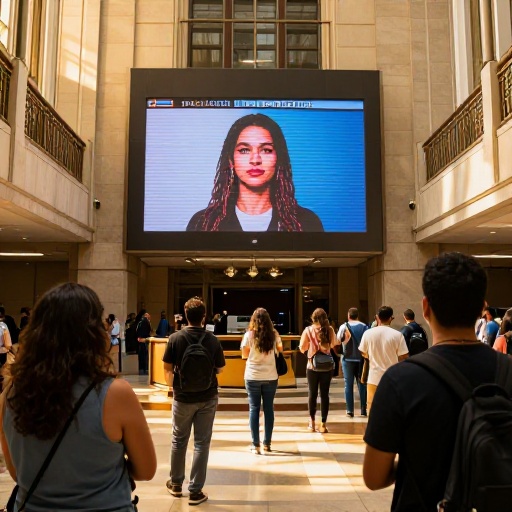
The controversy began when a video featuring a hyper-realistic avatar of Jair Bolsonaro circulated online. The former president was depicted speaking directly to voters, mimicking his rhetorical style with alarming accuracy. Although the content did not contain explicit disinformation or illegal campaign contributions, its mere existence raised alarms among election officials.
The TSE had previously issued resolutions requiring that any AI-generated political content be clearly labeled as synthetic. However, this particular avatar was created by a third-party group and distributed through social media channels without the mandated disclosures. This omission triggered an immediate investigation into whether the distribution violated electoral laws regarding transparency and authenticity.
Experts note that the sophistication of the avatar suggests it was not made for malicious intent but rather as a demonstration of capability. Yet, in the high-stakes environment of election season, the line between harmless tech demos and dangerous disinformation is increasingly thin. The incident underscores the difficulty courts face in policing content they cannot easily verify or attribute to specific actors.
Regulatory Frameworks vs. Technological Reality
Brazil has been a pioneer in attempting to regulate AI’s impact on elections. In 2021, the TSE issued Resolution No. 23695, which explicitly banned deepfakes and synthetic media that could distort political reality unless clearly identified as such. The goal was to prevent voters from being misled by fabricated statements or actions of candidates.
However, enforcement remains a logistical nightmare. Unlike traditional misinformation, where text can be fact-checked against public records, video content requires different verification methods. The Bolsonaro avatar case highlighted that while the law exists on paper, the technical infrastructure to detect and penalize violations is still catching up, more context in Supreme Court Faces Test of Anti.
The court’s response was swift but cautious. Rather than issuing immediate penalties without full forensic analysis, officials focused on educating platforms about their responsibilities under Brazilian law. This approach reflects a broader trend among electoral courts worldwide: prioritizing education and platform cooperation over punitive measures that may be difficult to enforce across borders.
Implications for Global Elections
The lessons from Brazil’s experience are particularly relevant for the United States, where AI-generated content is becoming a central concern in upcoming elections. Unlike Brazil, the U.S. lacks a unified federal framework regulating political deepfakes, leaving regulation to individual states and platform policies.
Orlando Ledger News has observed similar trends locally, with increased reports of synthetic media targeting local candidates and issues. The Brazilian case suggests that without clear labeling requirements and robust detection tools, voters may become desensitized to the authenticity of political content.
The TSE’s handling of the Bolsonaro avatar incident emphasizes the need for proactive measures rather than reactive ones. This includes developing partnerships with tech companies to improve detection algorithms and creating public awareness campaigns about identifying synthetic media.
"The challenge is not just detecting AI, but ensuring that voters understand what they are seeing," noted one election security expert familiar with Brazil’s regulatory efforts."
As technology continues to advance, electoral courts must balance the protection of democratic processes with the preservation of free speech. The Bolsonaro avatar case serves as a critical test case for how well legal frameworks can adapt to technological realities.