U.S. Intelligence Leak Undercuts Trump Claims of 'Winning' War Against Iran
Classified assessment reportedly finds Iran far from collapse, contradicting the president's optimistic war narrative
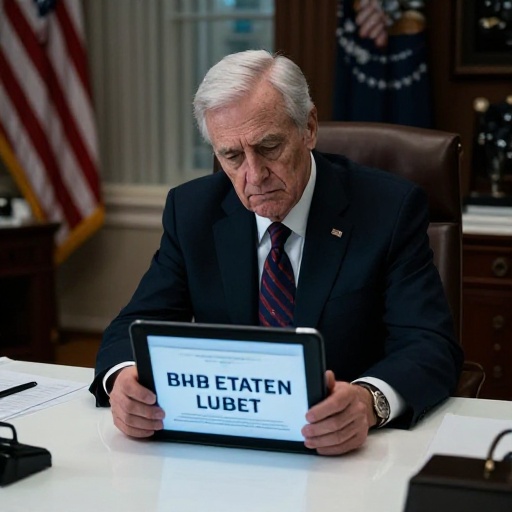
A leaked U.S. intelligence assessment is casting serious doubt on President Donald Trump's repeated claims that America is "winning" its military conflict with Iran, according to a report from The Daily Beast. The classified finding reportedly concludes that the Iranian government is not on the verge of collapse — a stark contradiction to the rosy picture the president has painted for the American public as the conflict enters its second week.
What the Intelligence Assessment Reveals
According to the reporting, U.S. intelligence agencies have determined that Iran's governmental structure remains intact and functioning despite ongoing military operations. The assessment undercuts a central narrative Trump has pushed since the early days of the conflict — that American military superiority would quickly bring Iran to its knees and force a favorable resolution.
On the eleventh day of the war, Trump had demanded credit for what he characterized as a swift and decisive campaign. However, the leaked intelligence suggests the reality on the ground tells a very different story. Iran's leadership, military infrastructure, and governance apparatus appear to be far more resilient than the administration has publicly acknowledged.
The gap between classified intelligence and public statements from the White House raises familiar concerns about how wartime information is communicated to the American people. Intelligence professionals have long cautioned against allowing political narratives to overshadow ground-truth assessments — a lesson painfully learned during the Iraq War era.
Trump's Claims vs. the Intelligence Community's Findings
President Trump has been vocal in his characterization of the conflict, using social media and public appearances to declare that the United States is dominating militarily. His messaging has focused on American technological superiority and what he has described as a crumbling Iranian regime unable to withstand U.S. firepower.
But the intelligence community's assessment paints a more complex picture. Iran has historically demonstrated an ability to absorb military strikes while maintaining governmental continuity, a pattern that appears to be holding in the current conflict. The country's decentralized military structure, which includes both conventional forces and the Islamic Revolutionary Guard Corps, provides redundancy that makes a quick collapse unlikely.
Defense analysts who spoke publicly about the situation have noted that Iran's geographic size, population of over 88 million people, and mountainous terrain make it a fundamentally different adversary than those the U.S. has faced in recent decades. A swift military victory was never a realistic expectation, according to multiple former military officials.
The disconnect between what intelligence professionals are reporting and what the public is being told is deeply concerning, particularly when American lives are at stake.
What This Means for Central Florida's Military Community
The revelations carry particular weight in Central Florida, home to thousands of active-duty military personnel, veterans, and defense industry workers. The region's military installations, including Naval Station Mayport to the north and Patrick Space Force Base to the east, serve as critical nodes in U.S. military operations. Many Central Florida families have loved ones who could be directly affected by an extended conflict.
Orlando's defense contracting sector, which employs thousands across the I-4 corridor, is also closely watching developments. Companies based in the region that support military simulation, training, and logistics operations are directly tied to the trajectory of any prolonged engagement, a story we covered in Democrat Warns Trump Has Already Lost War On Iran.
Veterans' organizations across Orange, Seminole, and Osceola counties have reported increased calls from concerned family members seeking information about deployments and the true state of the conflict. The leaked assessment is likely to amplify those concerns.
The Political Fallout
The intelligence leak comes at a politically sensitive moment. Congressional leaders from both parties have been demanding more transparency about the war's progress and its strategic objectives. Several members of Congress have questioned whether the administration has been forthcoming with lawmakers about the true state of affairs.
Florida's congressional delegation finds itself in a particularly complicated position. Many members have publicly supported the president's approach to Iran, and the leaked assessment puts them in the difficult position of reconciling their public statements with the intelligence community's more sobering evaluation.
Critics of the administration argue that the disconnect between Trump's public boasts and the intelligence community's findings represents a dangerous pattern of prioritizing political messaging over honest assessment. Supporters counter that intelligence assessments are by nature provisional and that the president has access to a broader range of information than any single leaked document can convey.
What Happens Next
The leak itself is likely to become a major story alongside the intelligence it revealed. The administration has historically taken an aggressive posture toward leakers, and investigations into the source of the disclosed assessment are expected.
For Central Floridians with family members in uniform and for the broader defense community along the I-4 corridor, the coming days will be critical. The gap between official rhetoric and intelligence reality has historically been a precursor to prolonged and costly military engagements — a prospect that hits close to home in a region so deeply connected to the nation's military apparatus.
As the conflict continues, the pressure on both the administration and Congress to provide honest, transparent updates to the American public will only intensify.