Trump Melts Down in Orlando When Pressed on Inflation Crisis During Campaign Stop
Former President claims 1.7 percent rate before war while reporters challenge economic data at local venue.
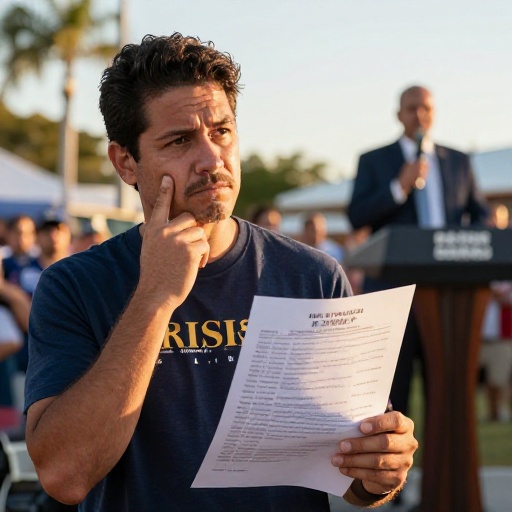
Former President Donald Trump faced a heated exchange with reporters in Orlando on Wednesday, visibly fracturing his composure when cornered on the nation's persistent inflation crisis. The campaign stop, held at a packed venue in the heart of Central Florida, quickly devolved into a shouting match as journalists pressed the candidate for specific economic data.
Trump, who has frequently touted his administration's pre-pandemic economic record, became agitated when asked to reconcile his claims with current consumer price realities. "Been working incredibly," Trump asserted, his voice rising as he gestured toward the crowd. "If you go back to just before the war, for the last three months, inflation was at 1.7 percent..."
The former president's assertion that inflation was negligible prior to the conflict in Ukraine drew immediate skepticism from the press corps. Reporters noted that the Consumer Price Index (CPI) had been climbing steadily well before February 2022, raising questions about the accuracy of his timeline.
Heated Exchange Over Economic Data
The tension in the room was palpable as a reporter from a national outlet challenged Trump's reliance on the 1.7 percent figure. The journalist pointed out that inflation had already begun its upward trajectory in late 2021, driven by supply chain disruptions and stimulus measures.
Trump cut off the question mid-sentence, repeating his claim that the current economic instability is solely the result of external factors beyond his control. "They are the ones who created the problem," he argued, pointing an accusatory finger at the current administration and global geopolitical events.
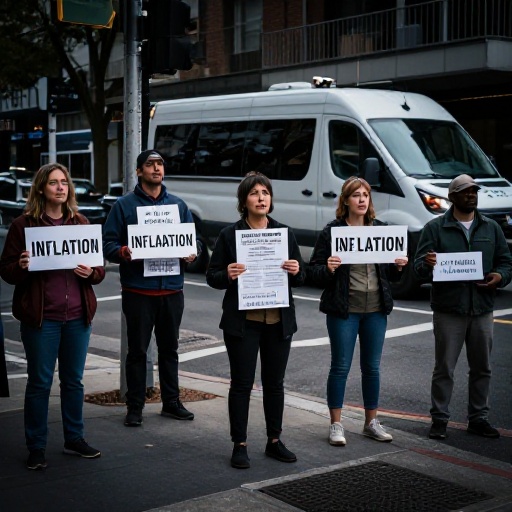
Local economists in Orange County have noted that while global events exacerbated the issue, domestic policy decisions played a significant role in the price hikes seen at grocery stores and gas stations across the I-4 corridor. The disconnect between the candidate's narrative and the lived experience of many Orlando residents was evident in the room.
"We are seeing prices that are double what they were three years ago," one local business owner in Winter Park told the Ledger after the event. "Whether it is the war or not, the cost of doing business has skyrocketed, and families are feeling the pinch at the checkout counter every single day."
Impact on Central Florida Voters
The debate over inflation is particularly resonant in Central Florida, where the cost of living has surged alongside rapid population growth and real estate development. From Kissimmee to Sanford, families are grappling with higher rents, increased insurance premiums, and rising food costs.
Trump's campaign has made economic recovery a central pillar of his message, promising to slash regulations and lower energy costs to bring prices down. However, the chaotic nature of the press conference in Orlando suggests that the candidate struggles to provide a cohesive explanation for the current economic landscape, as this newspaper reported in Oil Prices Surge After Trump Threatens Economic Warfare Against Iran.
Analysts suggest that this lack of clarity could be a liability in a swing state like Florida, where voters are deeply concerned about their personal finances. The I-4 corridor has seen some of the fastest growth in the nation, but that growth has come with a steep price tag that many residents are struggling to afford.
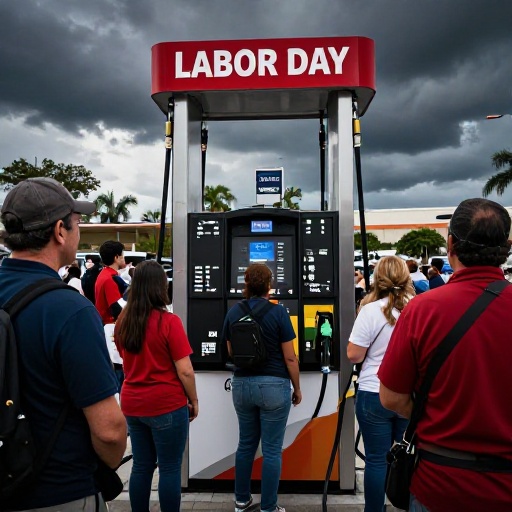
"The average family in Orlando is making tough choices," said a local community organizer. "They are choosing between filling their gas tank and buying groceries. When a candidate talks about 1.7 percent inflation, it feels disconnected from the reality on the ground."
Campaign Strategy and Local Reactions
Despite the friction, the event drew a large crowd of supporters who cheered loudly whenever Trump took the stage. The energy in the room shifted dramatically when the former president turned his attention to the audience, dismissing the reporters' concerns as part of a coordinated effort to undermine his campaign.
Trump's team has consistently argued that the current administration is responsible for the economic downturn, blaming high taxes and excessive regulation for the inflationary pressures. They maintain that a return to their policies would quickly stabilize the market and lower prices for consumers.
However, the incident in Orlando highlights the difficulty of maintaining a unified message when faced with direct challenges on economic data. As the election approaches, candidates will likely face increasing scrutiny on their ability to address the financial struggles of everyday Americans.
For now, the conversation in Central Florida remains focused on the immediate impact of these economic policies. Whether voters accept the narrative of external blame or look for domestic solutions will likely determine the outcome of the upcoming election in this critical region.
The former president concluded the event by reiterating his confidence in his economic plan, though the exchange with the press left a lingering question about the accuracy of his historical claims. As he left the stage, the debate over the true state of the economy continued among the attendees and the media alike.