Former Starbucks CEO Howard Schultz Is Moving to Florida: What Central Floridians Should Know
The billionaire coffee mogul and one-time presidential hopeful is relocating to the Sunshine State, joining a growing wave of high-profile transplants.
Howard Schultz, the billionaire who transformed Starbucks from a small Seattle coffee shop into a global empire, is making a major life change — he's moving to Florida. The news, first reported by The Palm Beach Post, adds another prominent name to the growing list of ultra-wealthy executives choosing the Sunshine State as their new home.
For Central Floridians already watching the state's economic and cultural landscape shift with each high-profile relocation, Schultz's move raises familiar questions about what draws these moguls south and what it means for communities across the I-4 corridor and beyond.
Who Is Howard Schultz?
Howard Schultz, 71, is one of the most recognizable figures in American business. Born in Brooklyn, New York, and raised in public housing, Schultz's rags-to-riches story has long been a cornerstone of his public persona. He attended Northern Michigan University on a football scholarship and later worked in sales before joining Starbucks in 1982, when the company had just four stores.
Schultz purchased Starbucks in 1987 and began an aggressive expansion strategy that would eventually grow the brand to more than 35,000 locations worldwide. Under his leadership, Starbucks became synonymous with premium coffee culture and pioneered benefits like health insurance and stock options for part-time employees — revolutionary moves at the time.
He served as CEO in two separate stints: from 1986 to 2000 and again from 2008 to 2017. He returned for a third time as interim CEO from 2022 to 2023, stepping in during a turbulent period marked by unionization efforts at stores across the country. His net worth is estimated at approximately $5.5 billion, according to Forbes.
A Brief Flirtation With Presidential Politics
Schultz made national headlines in 2019 when he announced he was seriously considering an independent run for president of the United States. The announcement drew immediate backlash from Democrats, who feared a third-party candidacy could split the anti-Trump vote and help re-elect then-President Donald Trump.
He ultimately decided against running, citing health concerns after undergoing back surgeries. But the episode cemented Schultz as more than just a coffee executive — it placed him squarely in the national political conversation.
"I am seriously thinking of running for president. I will run as a centrist independent, outside of the two-party system," Schultz said during a January 2019 appearance on "60 Minutes."
His political leanings have generally aligned with moderate Democratic positions, though he has been critical of both major parties. Whether his move to Florida signals any future political ambitions remains to be seen, but the state has increasingly become a hub for politically active billionaires.
Why Florida? The Billionaire Migration Continues
Schultz's relocation fits a well-documented pattern. Florida's lack of a state income tax has made it a magnet for wealthy individuals and business leaders looking to reduce their tax burden. Washington state, where Schultz has long resided, enacted a 7% capital gains tax in 2021, which the state Supreme Court upheld in 2023.
For someone with Schultz's wealth, the financial incentive to relocate is substantial. Other high-profile figures who have made similar moves include hedge fund managers Ken Griffin and David Tepper, Citadel's move of its headquarters to Miami, and numerous tech entrepreneurs settling across South Florida, a story we covered in Byron Donalds Promises NASA HQ Move and More Space Jobs for Florida.
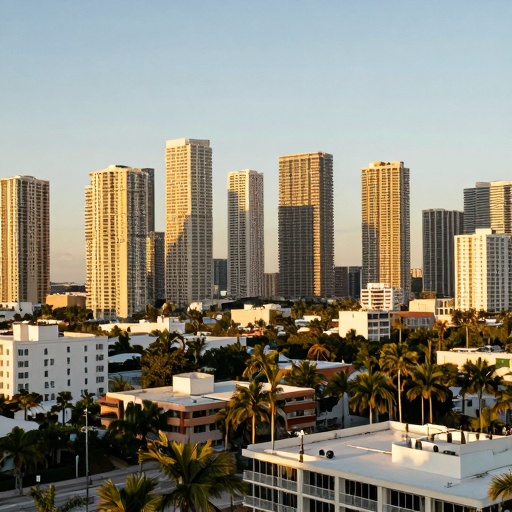
While Schultz is reportedly settling in the Palm Beach area rather than Central Florida, the ripple effects of these high-net-worth relocations are felt statewide. The influx of wealth has driven up real estate prices, fueled luxury development, and shifted the state's economic center of gravity.
What It Means for Central Florida
For Orlando and the I-4 corridor, the billionaire migration trend has been a double-edged sword. On one hand, wealthy transplants bring investment, philanthropy, and economic activity. On the other, the associated real estate pressures have contributed to rising housing costs that are already squeezing working families across Orange, Osceola, and Seminole counties.
Central Florida's median home price has climbed significantly in recent years, and the region's cost of living continues to rise. While Schultz's direct impact on the Orlando market may be minimal, the broader trend he represents — wealthy individuals reshaping Florida's economy — is impossible to ignore.
Starbucks itself has a significant footprint in the Orlando area, with dozens of locations serving locals and the millions of tourists who visit the region's theme parks each year. Whether Schultz's proximity to the state changes anything about that corporate relationship is unlikely, given that he no longer holds an operational role at the company.
Schultz's Legacy and What Comes Next
Schultz stepped down from the Starbucks board in September 2023, severing his last formal tie to the company he built. Since then, Starbucks has undergone significant leadership changes, bringing in Brian Niccol, former CEO of Chipotle, to lead the company through a challenging period of declining same-store sales.
As Schultz begins this new Florida chapter, he leaves behind a complicated legacy — celebrated for building one of the world's most iconic brands, yet criticized for his handling of labor relations in his final years at the helm. His move south is yet another chapter in a life defined by reinvention.
For Floridians, his arrival is part of a larger story about who is choosing to call the Sunshine State home and how that's reshaping communities from Palm Beach to Orlando and everywhere in between.