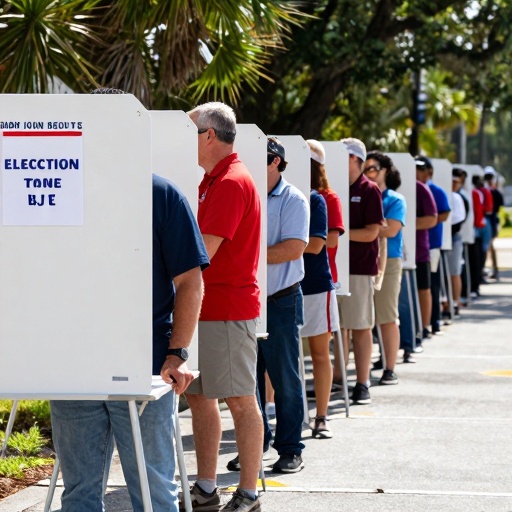
Florida's Republican-controlled Legislature is advancing a sweeping set of election-law changes that align closely with President Donald Trump's priorities — moves that supporters say will strengthen election integrity but that critics warn could prevent some eligible Florida citizens from casting their ballots.
Governor Ron DeSantis and GOP lawmakers have long touted Florida's election system as the gold standard in the nation, pointing to smooth operations during recent cycles. But that hasn't stopped them from pushing additional restrictions that mirror demands coming from the Trump administration at the federal level.
What's Changing in Florida's Election Laws
Among the most significant provisions being considered is a requirement for proof of citizenship when registering to vote — a key demand that President Trump has championed nationally. While non-citizen voting is already illegal under both state and federal law, and documented cases remain exceedingly rare, the push to add verification layers has become a central rallying cry for Republicans across the country.
The proposed changes would place new burdens on county supervisors of elections to verify citizenship status of registered voters, potentially using federal databases. Voters flagged as potentially ineligible could be removed from the rolls or required to provide additional documentation before being allowed to vote.
Critics, including voting rights organizations and some county election officials, have raised alarms that such database matching systems are notoriously unreliable. Naturalized citizens, in particular, could find themselves wrongly flagged and forced to navigate bureaucratic hurdles to prove their eligibility — a process that could effectively disenfranchise legal voters.
Impact on Central Florida Voters
The potential impact in Central Florida could be substantial. Orange County, home to Orlando, has one of the most diverse electorates in the state, with significant populations of naturalized citizens from Puerto Rico, Latin America, the Caribbean, and Asia. Osceola County, which includes Kissimmee, has seen explosive population growth driven largely by Hispanic and immigrant communities.
Voting rights advocates say these are precisely the communities most likely to be caught up in citizenship verification errors. Database mismatches — where a voter registered as a citizen but whose earlier immigration records still appear in federal systems — have caused problems in other states that have attempted similar measures.
"When you create these additional barriers, the people who get hurt aren't fraudulent voters — they're real citizens who have every right to participate in our democracy," one Central Florida voting rights advocate told reporters.
County supervisors of elections across the I-4 corridor have also expressed logistical concerns. Processing citizenship challenges and managing additional verification steps would require staff time and resources that many offices say they simply don't have, particularly heading into election cycles.
Republicans Defend the Measures
Republican lawmakers backing the changes say the provisions are common-sense safeguards that the vast majority of voters will never notice. They argue that verifying citizenship is a basic requirement that ensures only eligible Americans participate in elections.
Governor DeSantis has been a vocal proponent of election security measures throughout his tenure. His administration established the Office of Election Crimes and Security in 2022, which has pursued cases of alleged illegal voting — though many of those prosecutions involved individuals who said they were confused about their eligibility rather than intentional fraudsters, as this newspaper reported in Trump Leaves Door Open for National Emergency on Voting Rights in Orlando.
The alignment with Trump's priorities is unmistakable. The former and current president has made proof-of-citizenship requirements a cornerstone of his election agenda, pushing for similar mandates at the federal level. Florida's willingness to move forward with state-level implementation positions DeSantis and the Legislature as key allies in that effort.
Broader Voting Restrictions in the Package
The citizenship verification component is just one piece of a larger package of election-law changes moving through Tallahassee. Other provisions under consideration include tightening rules around mail-in ballots, increasing penalties for election-related offenses, and giving the state more authority to oversee local election operations.
Florida has already enacted significant voting restrictions in recent years. A 2021 law imposed new limits on drop boxes, added ID requirements for mail voting, and restricted who could collect and return ballots on behalf of voters. A 2023 measure further tightened rules around voter registration organizations.
Democrats in the Legislature have pushed back, arguing that the cumulative effect of these changes is to make voting harder for communities that already face barriers to participation. They point out that Florida's elections have run smoothly precisely because the existing system works — and that layering on additional restrictions solves a problem that doesn't meaningfully exist.
What Comes Next
As the legislative session continues in Tallahassee, the election-law package is expected to move through committees and could reach Governor DeSantis's desk in the coming weeks. Given the Republican supermajority in both chambers, passage appears likely.
For voters in Orlando, Kissimmee, Sanford, and across Central Florida, the practical effects may not be felt until the next major election cycle. But voting rights groups are already gearing up to educate communities about the changes and help affected voters navigate any new requirements.
Legal challenges are also possible. Similar citizenship verification efforts in other states have faced court battles, with opponents arguing they violate the National Voter Registration Act and disproportionately burden minority voters.
For now, Central Florida residents should ensure their voter registration is up to date and monitor any communications from their county supervisor of elections as these changes take shape.